Displays LCD em barra em um supermercado europeu
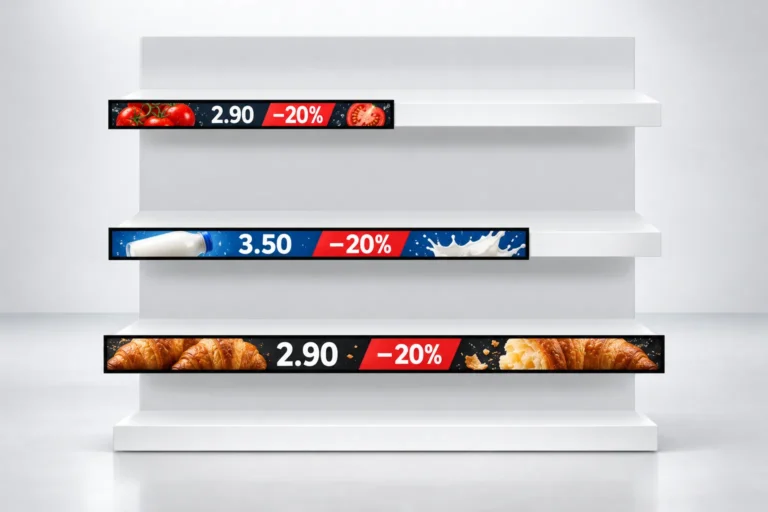
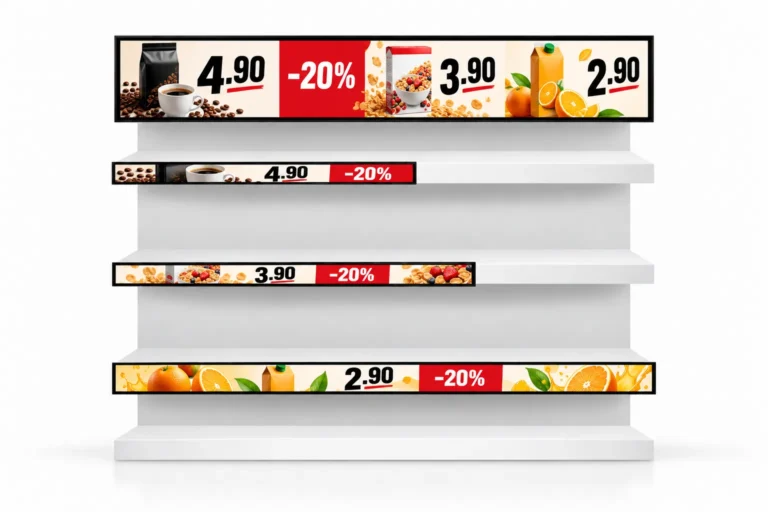
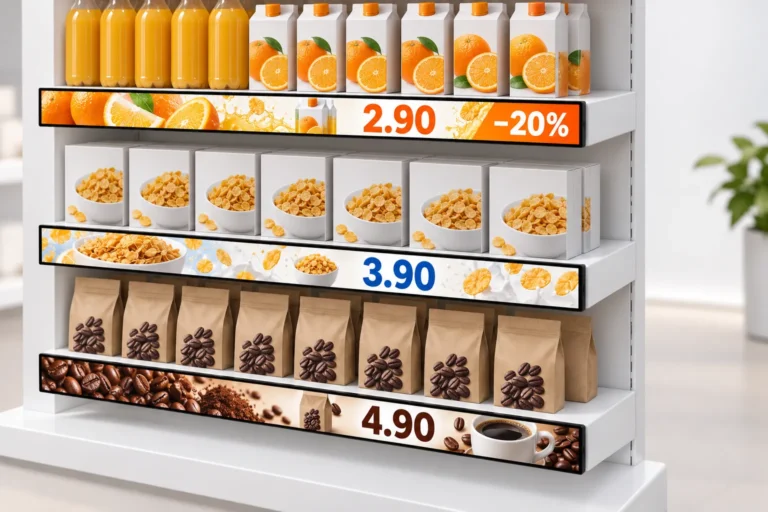
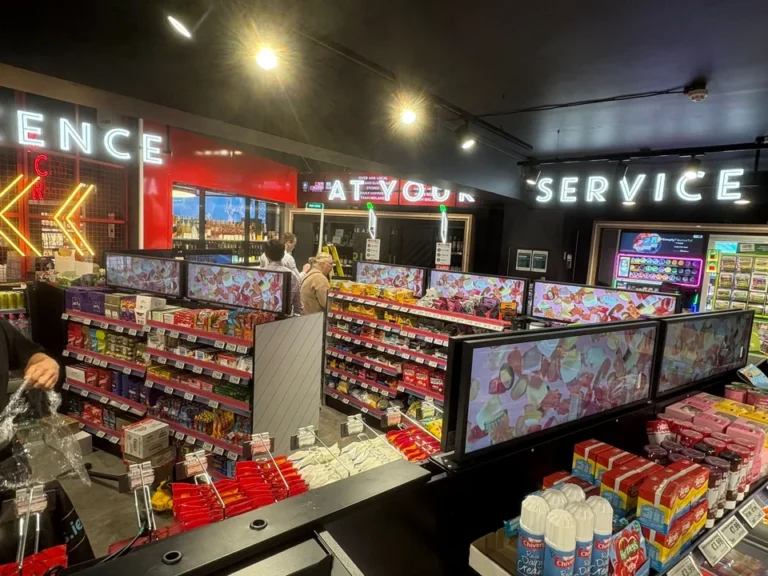
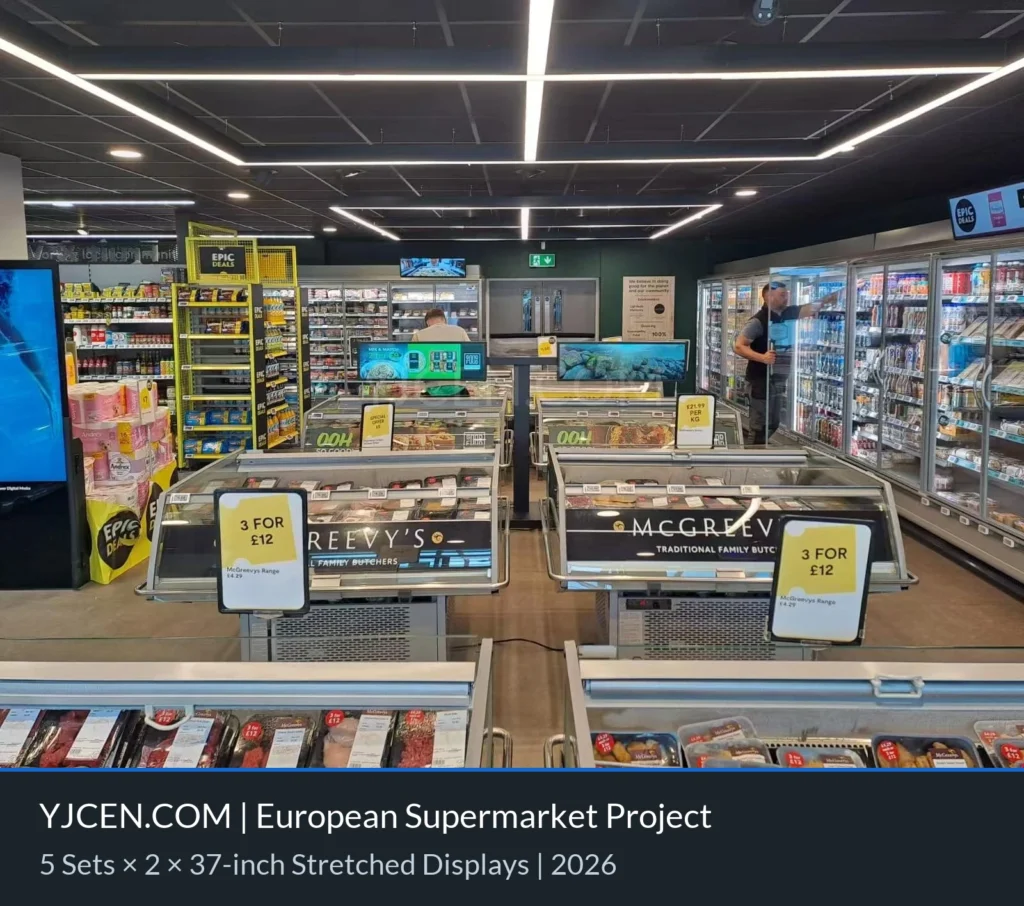
A supermarket in Europe uses YJCEN stretched bar LCD displays above shelves near the checkout area. The project used ten 37-inch stretched displays with five custom floor-standing supports. The screens show product promotions, including confectionery images, alongside the goods on the shelves below.
The fixture, not the screen, set the brief. The supermarket had a wide, short opening above the refrigerated units and needed a display that would fit the existing shelving without reducing the shelf space. A standard 16:9 screen would have been too tall; a stretched bar matches the horizontal opening and keeps the content in a single row.
Each support carries two displays, which is why ten screens use five supports. The support dimensions were matched to the refrigerated units and the available space, with power and signal cables routed through the columns. The custom stands keep the screens at a consistent height along the aisle and leave access for cleaning and service.
The 37-inch bar size was chosen for the visible opening and the viewing distance in the checkout area. The content is a simple promotional loop: product image, price and a short message. The horizontal format suits a single row of text and price, and the screen sits close enough to the shopper for a small image to read.
Cabling was the main installation constraint. The supports had to hide the power and signal cables, keep them out of the refrigerated case and allow the units to be serviced without dismantling the shelving. The team agreed the cable route and the connector positions before the supports were built, because a small change after fabrication is expensive.
The supermarket's team updates the content. Promotions rotate by product and by week, and the screens can be changed without reprinting shelf strips or moving the fixtures. The displays are not touch screens; they are a passive promotional layer above the shelf, which keeps the cost and the installation simple.
The rollout was planned as one aisle first, then the remaining positions. That let the store check the height, the brightness, the content legibility and the cleaning routine before committing to all ten screens. The supports were built as a matched batch so the screens line up along the aisle.
The project shows how a stretched display is specified by the opening, not the diagonal. The visible image area, the depth behind the fascia and the space for the player and power decide the bar size. A larger screen that does not fit the fixture is worse than a smaller screen that sits correctly.
For a similar supermarket or convenience-store project, send the fixture drawing, the opening dimensions, the depth, the power location and a photo of the aisle. Confirm who cleans the screens and who updates the content. Those details decide the support, the bar size and the service access.
Content governance matters as much as the fixture. The supermarket uses a simple template with a fixed brand frame, a product image and a price field. Promotions are approved before they are scheduled, and the price on the screen is checked against the shelf price and the POS. A stretched display is close to the product, so a price mismatch is more visible than on a distant wall screen. The store keeps a small library of approved images and a named owner for the content.
Service and cleaning were planned with the store team. The supports leave access to the screens and the refrigerated units, and the cleaning routine avoids spraying water into the enclosure. The screens are not touch screens, so the main service items are the player, the power supply and the cable connections. A spare support and a spare screen are kept for the aisle, because a failed bar can leave a visible gap in the promotional run.
The rollout was deliberately staged. The store installed one aisle, checked the height and the content from the shopper's position, then repeated the detail across the remaining positions. The supports were built as a matched batch so the screens line up and the cabling is consistent. That approach is slower than ordering all ten at once, but it catches a fixture or content problem before it is repeated down every aisle.
The fixture decision is the part that is hardest to change later. The support height, the opening and the cable route are built around the refrigerated case, so the store should sign off the drawing before fabrication. A bar screen that fits the opening looks integrated; a screen that hangs below or above it looks added on.
The store also keeps the screen content short. A shopper passes the aisle quickly, so the bar shows one product, one price and one short message rather than a full promotion catalogue.
That discipline keeps the aisle easy to read at a glance.
Ver todos os projetos: Displays LCD em formato de barra