
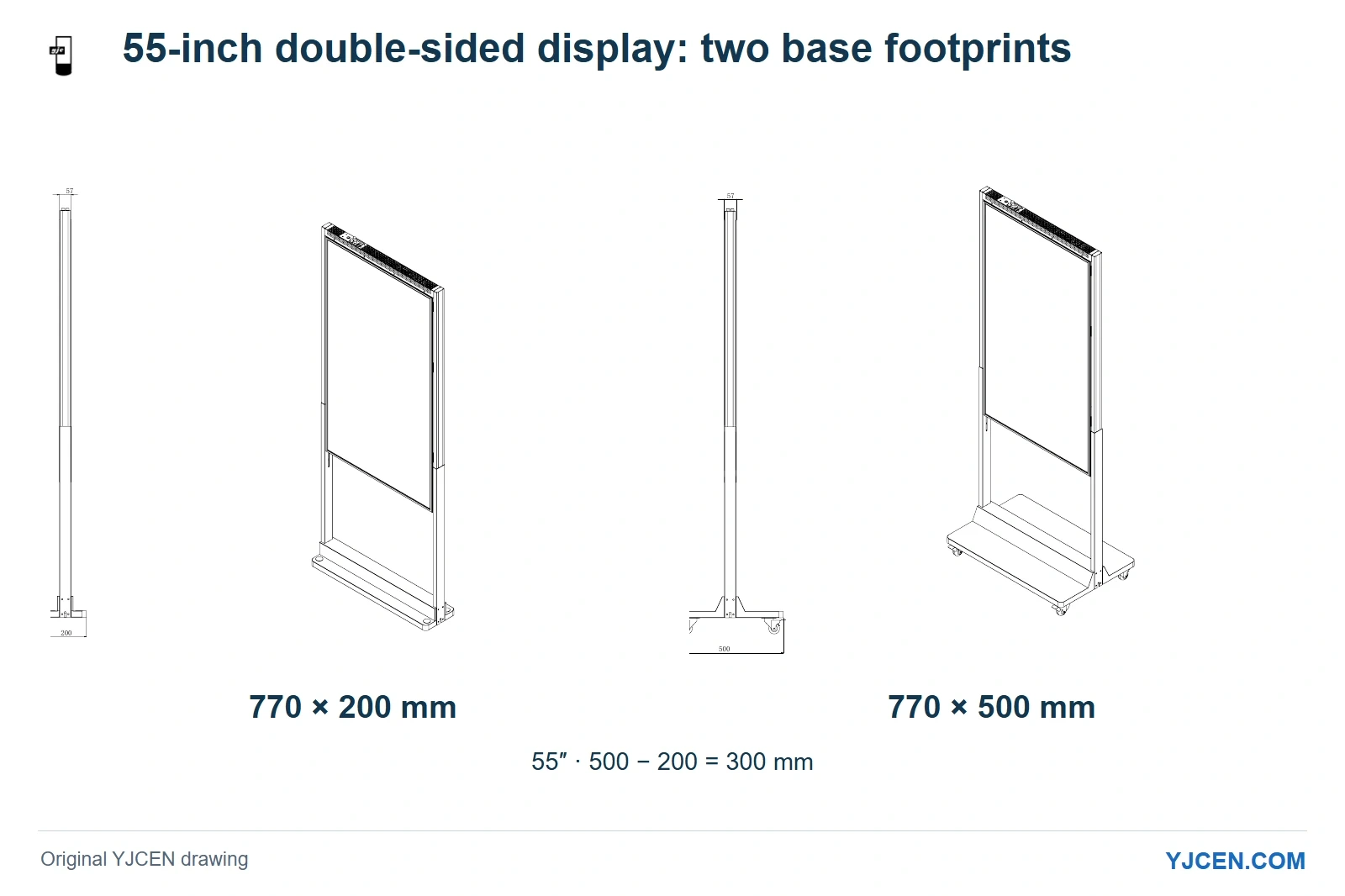
The fixed small base measures 770 × 200 mm; the direct-placement caster base measures 770 × 500 mm. The second uses 300 mm more equipment depth, before surrounding passage space.
A double-sided window display makes sense when people on both sides of the glass have a useful message to read. We would choose the installation around those two viewing positions and the space the store can give the screen. Our Digital Window Displays include double-sided configurations with suspended and floor-supported arrangements; the illustrated 55-inch options differ in floor footprint and fixing work.
Do both sides have a real audience?
Start by standing where the intended viewers will be. The street-facing side might introduce an offer to passersby, while the inside face might remain visible to customers waiting or browsing. If the inward face looks into a stock area, the second screen adds little to that location.
For a narrow storefront with useful sightlines in both directions, we would assess one double-sided unit before placing two separate cabinets back to back. The integrated arrangement gives the layout one display position to accommodate. If the two audiences need different positions or viewing heights, separate screens can offer more useful placement freedom.
| Storefront situation | Our starting layout | Why |
|---|---|---|
| Street audience and an indoor waiting or browsing area share one window position | One double-sided window display | Both faces can serve an audience from the same installation |
| The inward face would be hidden behind fixtures | A single street-facing display | Keep the hardware aligned with the visible message |
| Indoor viewers gather elsewhere or need another viewing height | Separate display positions | Let each screen face its actual audience |
What changes between the street view and the store view?
The outward message is viewed through glazing and can compete with reflections of the sky, traffic or buildings. Indoors, people may stand closer and look for longer. We would describe the message and viewing distance for each face separately, even where the project intends to repeat the same content.
For the street side, large text and a short offer are a practical starting point. For the store side, the useful message might be a service explanation or a reminder associated with the nearby sales area. These are content requirements to discuss with the playback configuration, not assumptions about how many players the cabinet contains.
Reflectance and ambient contrast influence how a display looks in daylight. For the street-facing view, plan brightness and reflections around the actual glazing and audience position. The layout decision here is whether both faces can be seen clearly from their intended positions.
When would we choose a suspended installation?
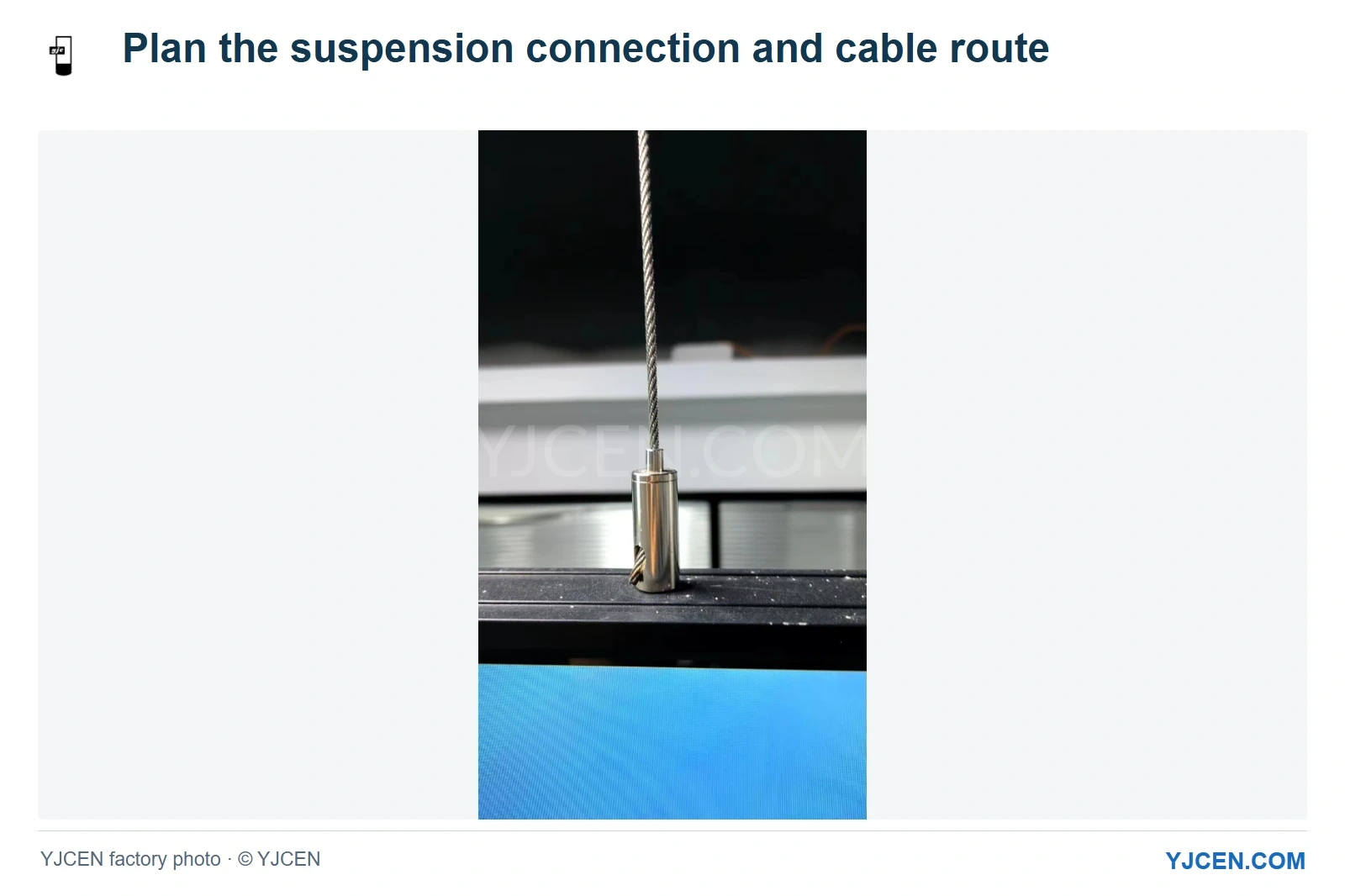
Suspension is useful when a floor base would occupy merchandise space or interrupt the window layout. For the illustrated 55-inch double-sided design, the suspension options are hanging cables or telescopic rods. We would compare these arrangements with the available overhead support and the desired display position before settling the window composition.
In the illustrated 55-inch hanging-cable arrangement, the two suspension lines are 460 mm apart. That spacing helps coordinate the selected display with its support, but does not define the building connection by itself. The installation still needs the supporting structure and cable route coordinated with the screen location.
Look at the complete suspended display from both sides before fixing its height. A window transom can cut through the outward message, while an indoor shelf can block the lower part of the inward screen. Moving the display a little within the opening can be more useful than enlarging the screen.
How much floor space do the two base options use?
For the illustrated 55-inch double-sided unit, the small base measures 770 × 200 mm and is fixed with expansion screws. The large base measures 770 × 500 mm and has casters for direct placement. The screen size is the same, but the large base occupies 300 mm more depth.
| 55-inch drawing option | Base width × depth | Installation shown | Layout implication |
|---|---|---|---|
| Small base | 770 × 200 mm | Fixed with expansion screws | Shallower footprint, with floor fixing work |
| Large base | 770 × 500 mm | Direct placement, with casters | More floor depth allocated to the base |
We would consider the fixed small base for a permanent position where the floor can receive the specified installation. Where direct placement is the preferred arrangement, the layout needs to accommodate the larger base in full. Showing only the thin screen body on a shop plan would hide this difference.
Keep the base outline and the surrounding passage space separate on that plan. The 200 mm and 500 mm figures describe the equipment footprint, so any walking route, access or nearby fixture space is additional. The installer can then see what belongs to the display and what must remain usable around it.
What should the two-sided content brief contain?
Give each face a simple description: audience, viewing direction, message and operating hours. If both faces should repeat one promotion, say so; if they need different material, include that requirement when discussing the system configuration. This prevents a two-sided cabinet from being selected before anyone has decided what the second face is for.
We would also keep the inward and outward artwork identifiable by name during content preparation. A “street” and “store” label in the project brief is clearer than “front” and “back” once the drawing is viewed from another direction. It helps the integrator connect the physical orientation with the intended message.
Frequently asked questions
Should every shop window use a double-sided display?
No, both faces should have a useful viewing position and purpose. A single street-facing screen is a better starting point where fixtures hide the inward face.
How deep are the illustrated 55-inch floor bases?
The small base is 200 mm deep; the large base is 500 mm deep. Both are 770 mm wide; the small base is fixed with expansion screws, while the large base has casters for direct placement.
Can the 55-inch double-sided configuration be suspended?
Yes, the illustrated 55-inch configuration has hanging-cable and telescopic-rod installation options. We would select the arrangement around the support structure, viewing height and cable route.
Plan both views of your storefront
If you are deciding between a suspended and floor-supported double-sided window display, send us a window photo or plan showing both audiences, the available floor depth and possible fixing positions. Add the message intended for each face. We can compare the relevant YJCEN mounting arrangements with that layout and discuss a configuration that serves both views without consuming unnecessary retail space.