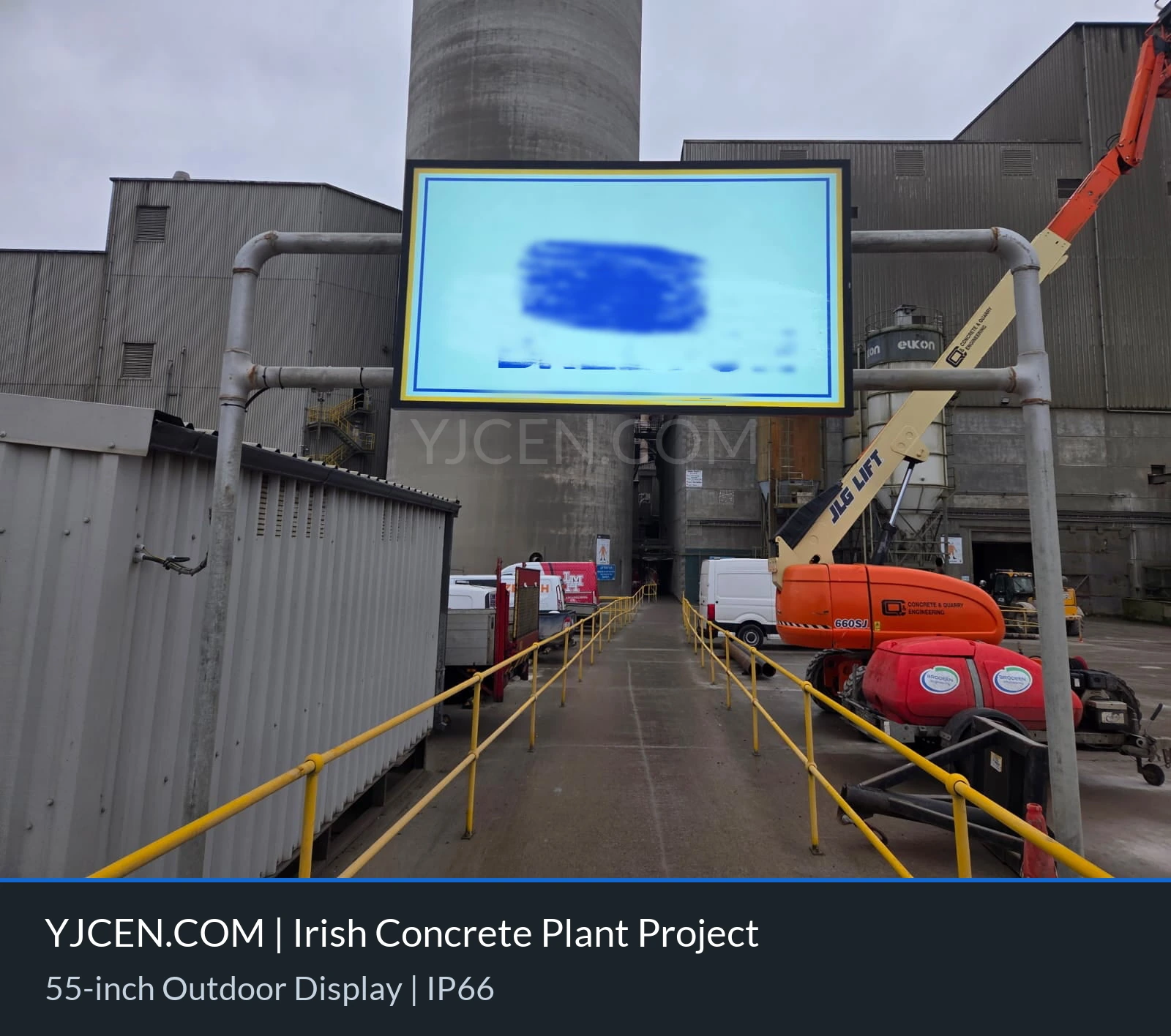
Outdoor Display Project for an Irish Concrete Plant
This project used a 55-inch YJCEN outdoor display at a concrete production plant in Ireland. The selected model was YJC-550-OD09-A.
The installation area is exposed to dust, humidity and changing temperatures. These conditions required a protected enclosure instead of a standard indoor display. The supplied unit has an IP66 rating for use in this demanding environment.
The wall-mounted display provides a central point for production information, safety messages and workflow guidance. Continuous 24/7 operation is the specified operating mode; this case does not report a measured uptime or productivity-improvement percentage.
Project Specifications
- Product model: YJC-550-OD09-A
- Display size: 55 inches
- Protection rating: IP66
- Installation method: Wall-mounted
- Operating mode: 24/7 continuous operation
- Application: Outdoor industrial information display
- Project location: Concrete plant in Ireland
- Site conditions: Dust, humidity and significant temperature changes
What the installation shows
The project photograph shows a landscape display beside a plant access walkway. The documented hardware is a 55-inch YJC-550-OD09-A with an IP66 protection rating. The planning points below explain considerations for a similar site; they are not additional measured results from this installation.
Checks to carry into a similar industrial project
- Photograph the proposed viewing positions, mounting surface and routes used by staff and vehicles.
- Agree on the message owner, update process and what should be shown when information is unavailable.
- Confirm safe service access and the manufacturer’s cleaning and sealing requirements before installation.
Why the Plant Needed a Protected Display
A concrete plant is different from a clean office or an indoor retail space. Materials handling can create airborne dust. Outdoor and partly open areas may also expose equipment to moisture and changing weather.
Heavy equipment and vehicles move through the site throughout the working day. The plant therefore needed a display selected for its actual installation position and operating conditions.
A standard indoor screen is not normally intended for this environment. For this project, the IP66 protection rating addressed the specified dust and water exposure; mounting, cable entries and service access still required site-specific planning.
What the IP66 Rating Means
An IP rating describes the enclosure’s protection against solid particles and water. In IP66, the first digit refers to protection against dust. The second digit refers to protection against powerful water jets.
This rating makes the enclosure suitable for locations where dust and moisture must be considered. It does not mean that every installation condition can be ignored. The final position, cable entries and mounting work still need careful planning.
Installers should use suitable cable routing and seals. They should also protect the power and signal connections required by the selected configuration. The installation must follow the product instructions and the requirements of the site.
Supporting Continuous 24/7 Operation
The YJC-550-OD09-A supplied for this project supports continuous operation. This allows the plant to keep important information visible during different shifts and operating periods.
A 24/7 operating plan requires more than leaving a screen switched on. The site team should define inspection, cleaning and maintenance procedures. Service access must remain available after the unit is mounted.
Power availability should also be checked before installation. Cables need an organised route that does not interfere with vehicles, machinery or pedestrian movement. Any content source or network connection should match the plant’s approved system.
Information Shown at the Concrete Plant
The wall-mounted display gives the plant a fixed location for operational communication. The content can be arranged around the people who use the area and the time available for them to read each message.
Production Information
The screen can present selected production data and status updates. Each item should have a clear label and a readable layout. Operators should be able to identify the current information without reading a long block of text.
Safety Alerts
Safety reminders and site alerts can be displayed in a visible format. Important notices should use direct wording, strong contrast and an appropriate text size. Digital signage supports site communication, but it does not replace required safety systems or procedures.
Workflow Guidance
The display can provide guidance for operators, drivers, contractors and visitors. Examples include access information, delivery directions and current workflow instructions. The plant decides which messages are approved for display.
Site Notices
Maintenance notices, schedule changes and temporary access restrictions may also be shown. Short messages are easier to scan in an active industrial area. Each notice should state the action required and the period for which it applies.
Wall-Mounted Installation Planning
Wall mounting keeps the display above floor-level activity. It also gives the plant a fixed viewing position. Before installation, the team must confirm that the wall or supporting structure is suitable for the display.
The mounting height should match the normal viewing distance. The screen should remain visible without placing viewers in a vehicle route or an active work zone. Site photos and measurements are useful when reviewing the proposed location.
The installer should check the following points:
- The wall or support can carry the display and mounting hardware.
- The screen is visible from the intended viewing area.
- Power and signal cables have a protected route.
- Cable entries maintain the required enclosure protection.
- The position leaves enough access for inspection and service.
- The display does not obstruct a walkway, exit or working area.
- Nearby vehicles or machinery do not create an avoidable impact risk.
Readability in an Industrial Environment
Industrial information must be easy to scan. Viewers may be standing at different distances, and some may only see the screen for a short time. A simple content structure is therefore important.
Each screen should focus on one main message. Headings, numbers and warnings need a clear visual order. The site team should avoid small text and crowded layouts.
Ambient light can change during the day. The proposed screen position should be reviewed under the lighting conditions expected at the site. Final display settings depend on the selected product and the installation environment.
Content Management Considerations
The method used to update content depends on the selected system. A project may use a local media source, a network connection or an approved content management platform. These options should not be assumed to be included unless they are confirmed in the product configuration.
Access to operational content should be controlled by the plant. Staff responsible for updates need a clear approval process. Outdated notices should be removed when they no longer apply.
Before deployment, the team should test sample content on the actual screen. This check can confirm text size, contrast, message duration and viewing distance. It also helps identify content that is too detailed for the location.
Inspection and Maintenance
Outdoor industrial equipment needs routine inspection. The maintenance schedule should reflect the amount of dust, moisture and activity around the installation.
Checks may include the enclosure, mounting hardware, visible cable routes and external connections. Cleaning must follow the product instructions. The team should not use a method that could damage the screen or affect the enclosure.
Any change in the mounting structure or nearby machinery should trigger another site review. The display must remain secure, visible and accessible for service.
Information Needed for a Similar Project
A useful project review starts with the real operating environment. Customers should provide enough information for the display and installation method to be assessed.
- Installation country and project location
- Indoor, outdoor or partly sheltered position
- Site photos and proposed mounting area
- Required screen size and quantity
- Daily operating hours or a 24/7 requirement
- Expected dust, moisture and temperature conditions
- Normal viewing distance and intended audience
- Power, signal and network availability
- Required content source and update method
- Maintenance access around the installation
These details help separate confirmed project requirements from optional features. They also reduce the risk of specifying a screen before the installation conditions are understood.
Frequently Asked Questions
What display was used in this project?
The project used the YJCEN YJC-550-OD09-A. It is a 55-inch outdoor display with an IP66-rated enclosure.
Where was the display installed?
It was installed at a concrete production plant in Ireland. The display uses a wall-mounted installation.
Can this display operate continuously?
Yes. The model supplied for this project supports 24/7 continuous operation. The installation still requires suitable power, service access and a maintenance plan.
Does IP66 mean the display can be installed anywhere?
No. IP66 describes enclosure protection against dust and powerful water jets. The mounting structure, cable entries, connections, viewing conditions and other site risks must still be assessed.
What information can the screen show?
At this plant, the display supports production information, safety alerts and workflow guidance. The exact content and update method depend on the site’s approved communication process and the selected system configuration.
Explore Outdoor Display Solutions
Explore YJCEN commercial digital signage displays for industrial, retail and public-space applications. You can also view more digital signage client cases or contact YJCEN about an IP66 outdoor display project.