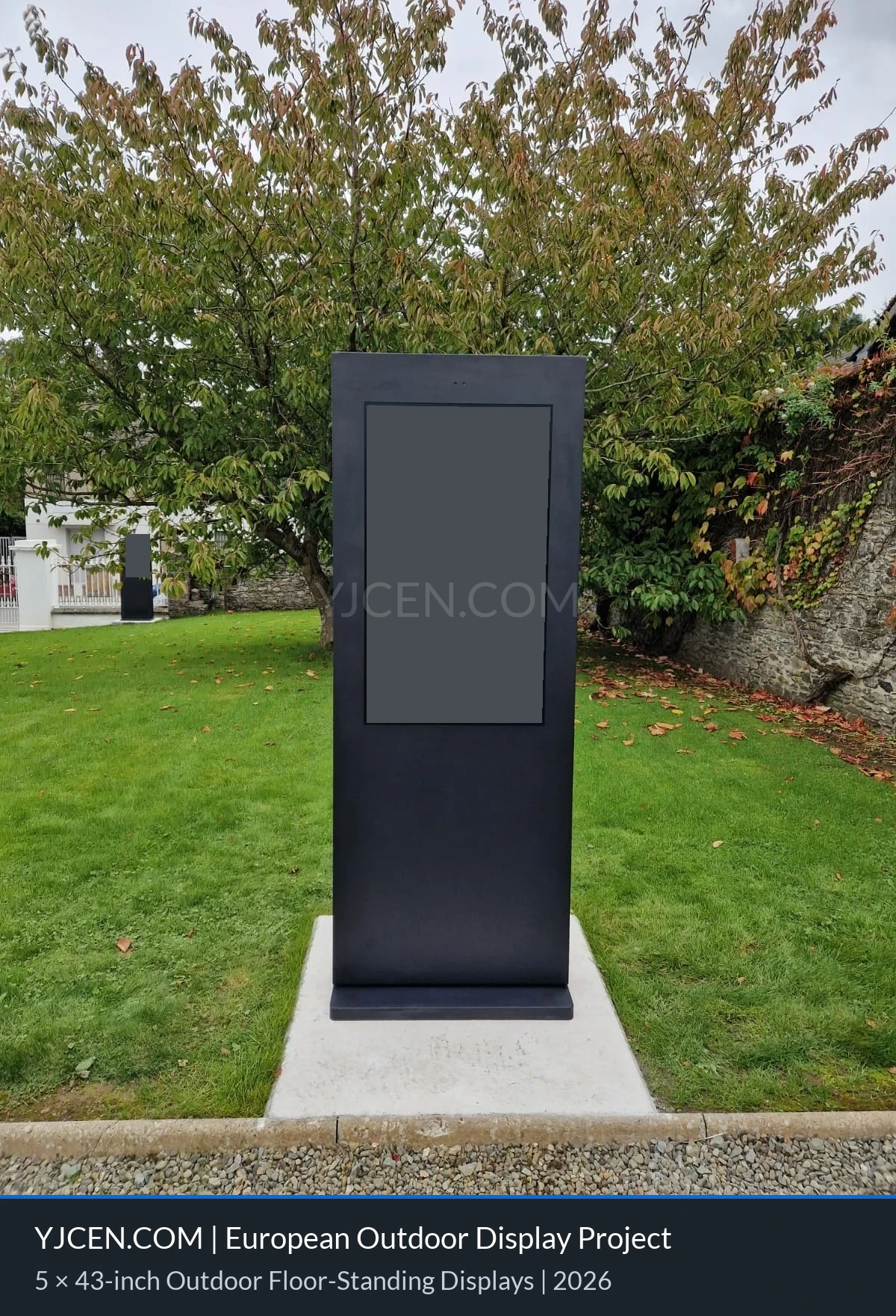
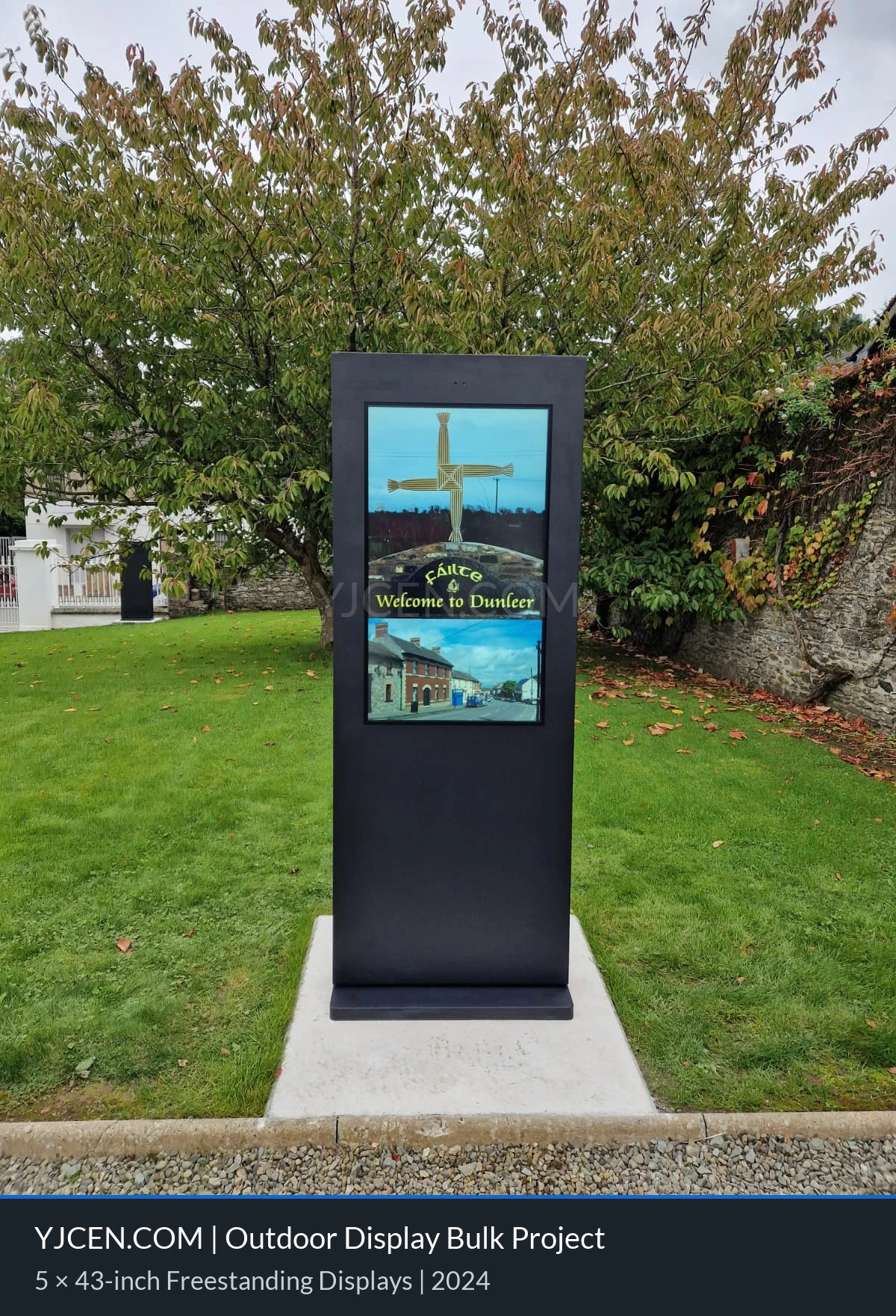
In 2024, YJCEN delivered five 43-inch single-sided outdoor freestanding digital signage units. The displays were supplied as one coordinated batch and remain in normal operation.
Each unit combines a 3,000-nit high-brightness LCD, an IP65-rated enclosure and an active fan-cooling system. The freestanding design provides a clear portrait display for outdoor advertising, public information and wayfinding without requiring a wall-mounted installation.
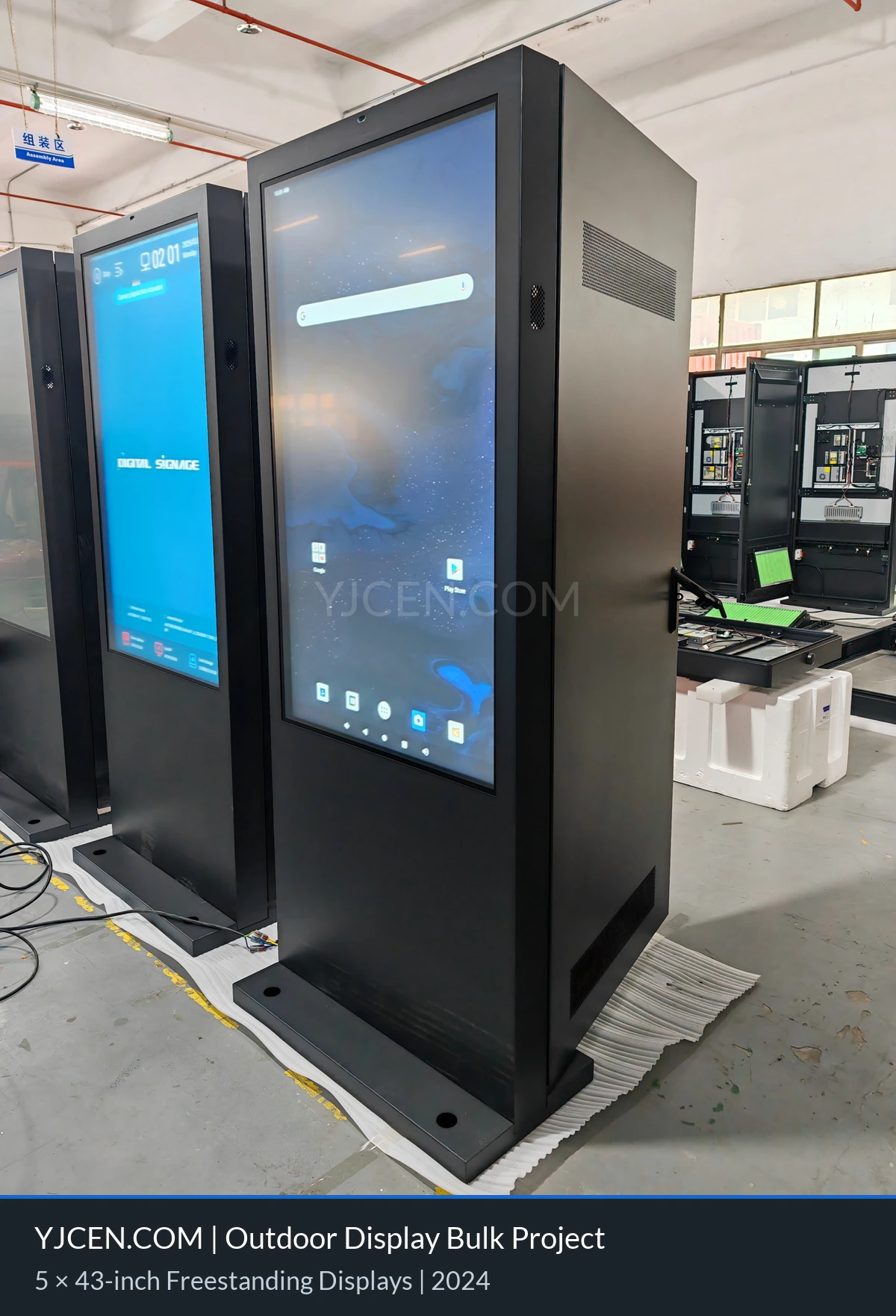
Project Specifications
- Display size: 43 inches
- Display format: Single-sided portrait screen
- Quantity: 5 units
- Brightness: 3,000 nits
- Protection rating: IP65
- Cooling method: Active fan cooling
- Installation type: Outdoor freestanding structure
- Delivery year: 2024
- Operating status: All five units are operating normally
Project Delivery and Operating Status
All five units were delivered as a matched production batch in 2024. Using the same 43-inch portrait panel, 3,000-nit brightness, IP65 enclosure and fan-cooling configuration across the order helps keep installation requirements, content dimensions and maintenance procedures consistent. This is especially useful when several outdoor screens need to be managed as one deployment.
The displays remain in normal operation. Their continued performance gives the project team a practical reference for similar outdoor freestanding installations. Future projects can use the same baseline specification while adjusting the foundation, power routing, screen orientation and environmental configuration for each site.
High-Brightness Displays for Outdoor Visibility
Outdoor screens must compete with daylight, reflections and changing ambient light. A standard indoor display can look dim or washed out in these conditions. The 3,000-nit LCD panels used for this project provide stronger visibility for outdoor advertising and information content.
Brightness works best when the content is also designed for quick viewing. Large text, strong colour contrast and simple layouts make messages easier to understand from a normal viewing distance. This is especially important in commercial areas and transport locations, where people may only see the screen for a few seconds.
IP65 Protection for Outdoor Installation
The five displays use IP65-rated enclosures to help protect the internal equipment from dust and water exposure. This makes the units suitable for appropriately planned outdoor installations where the screens may face rain, airborne dust and changing weather.
The protection rating is only one part of the installation. Outdoor power connections, cable entries and access panels must also be sealed correctly. The site should provide suitable drainage, a stable base and enough clearance for inspection and maintenance.
Active Fan Cooling
High-brightness LCD panels, power supplies and media-player components generate heat during operation. These units use powered fans and a planned airflow path to move warm air away from the internal components. This active fan-cooling system supports stable operation during extended use.
The cooling configuration must match the installation environment. Direct sunlight, local temperature, daily operating hours and nearby obstructions can all affect heat management. Ventilation areas should remain clear, and routine maintenance should include checking the fans and air paths for dust or debris.
Consistent Configuration Across Five Units
A multi-unit project requires consistent hardware and factory testing. All five displays were built with the same screen size, brightness, enclosure specification and cooling method. This makes content preparation, installation and future maintenance easier to manage.
Before shipment, the batch was checked for enclosure quality, display output, content playback and fan operation. Consistent testing helps reduce variation between units and supports a more predictable installation process.
Installation Planning
Outdoor freestanding displays require careful site preparation. The base or foundation must support the cabinet securely, and the screen should remain visible without blocking pedestrian or vehicle movement.
- Viewing position: Confirm the normal viewing distance and approach direction.
- Sunlight exposure: Review direct sunlight and reflections at different times of day.
- Foundation: Prepare a stable mounting surface suitable for the display structure.
- Power supply: Use protected outdoor power and properly sealed cable routes.
- Drainage: Prevent water from collecting around the base of the enclosure.
- Service access: Leave enough space to inspect the cabinet, fans and internal components.
Content Planning for Outdoor Screens
A 43-inch portrait display is suitable for promotional graphics, public information, wayfinding and short video content. The layout should focus on one clear message at a time. Small text and dense product information are difficult to read outdoors and should be avoided.
For a five-unit deployment, a shared content format keeps the presentation consistent. The customer can prepare files with the same portrait resolution, brand style and message hierarchy for every screen. Content can then be adapted for each location without rebuilding the complete layout.
Suitable Applications
Outdoor freestanding digital signage can support a range of public-facing applications:
- Advertising and promotions in commercial districts
- Information displays near retail entrances
- Wayfinding at transport facilities and visitor areas
- Event information at outdoor venues
- Brand campaigns in pedestrian locations
The final configuration should always be selected according to the actual site. Important factors include expected viewing distance, sunlight exposure, local weather, operating schedule, available power and installation method.
Frequently Asked Questions
What cooling method was used for this project?
The five displays use active fan cooling. Powered fans move air through a planned internal airflow path to help dissipate heat from the LCD panel and electronic components.
What does the IP65 rating provide?
The IP65-rated enclosure helps protect the equipment from dust and water exposure. Correct installation, cable sealing, drainage and maintenance are still required for reliable outdoor operation.
Is 3,000 nits suitable for outdoor advertising?
A 3,000-nit display provides much stronger daylight visibility than a standard indoor screen. The final requirement should still be confirmed against direct sunlight, screen orientation and viewing distance.
What information is needed for a quotation?
Please provide the installation country, required quantity, site photographs, screen orientation, viewing distance, operating hours, local temperature range, sunlight exposure, available power and mounting requirements. These details help YJCEN recommend an appropriate outdoor display configuration.
Explore Outdoor Digital Signage Solutions
Explore YJCEN outdoor digital signage solutions for commercial and public locations. You can also review more client cases or contact YJCEN to discuss an outdoor freestanding display project.