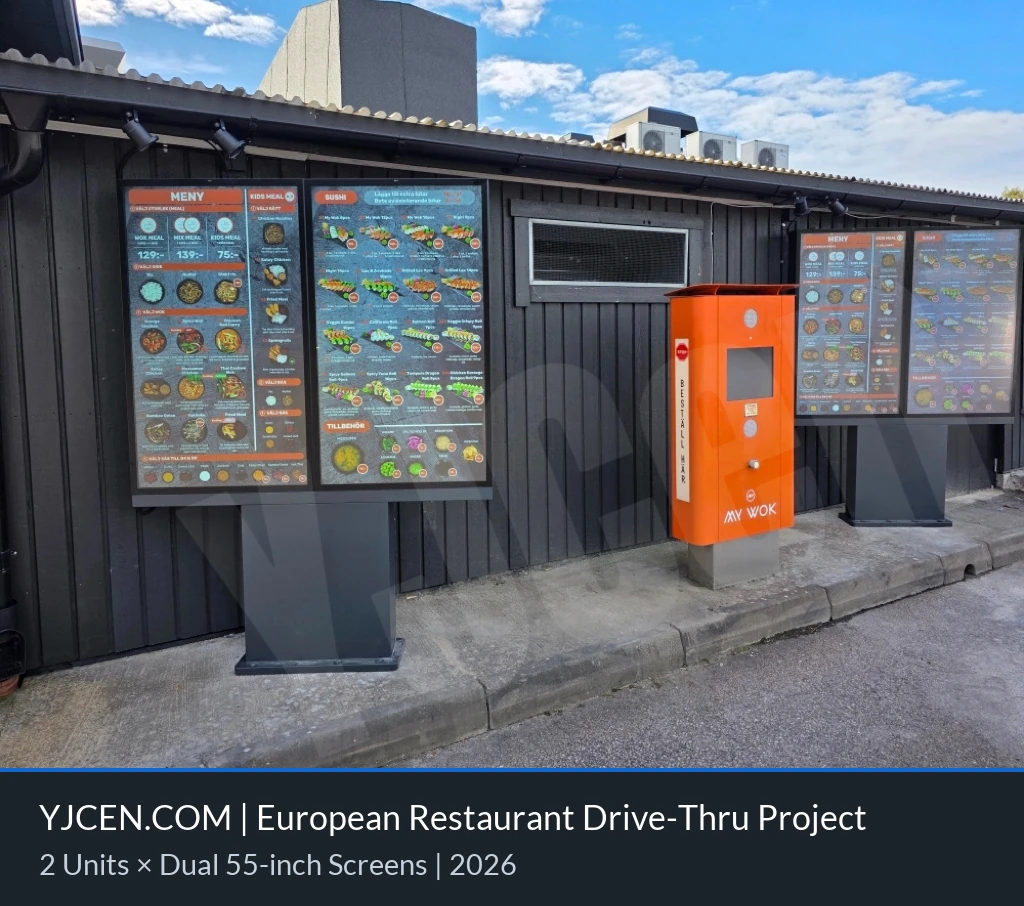
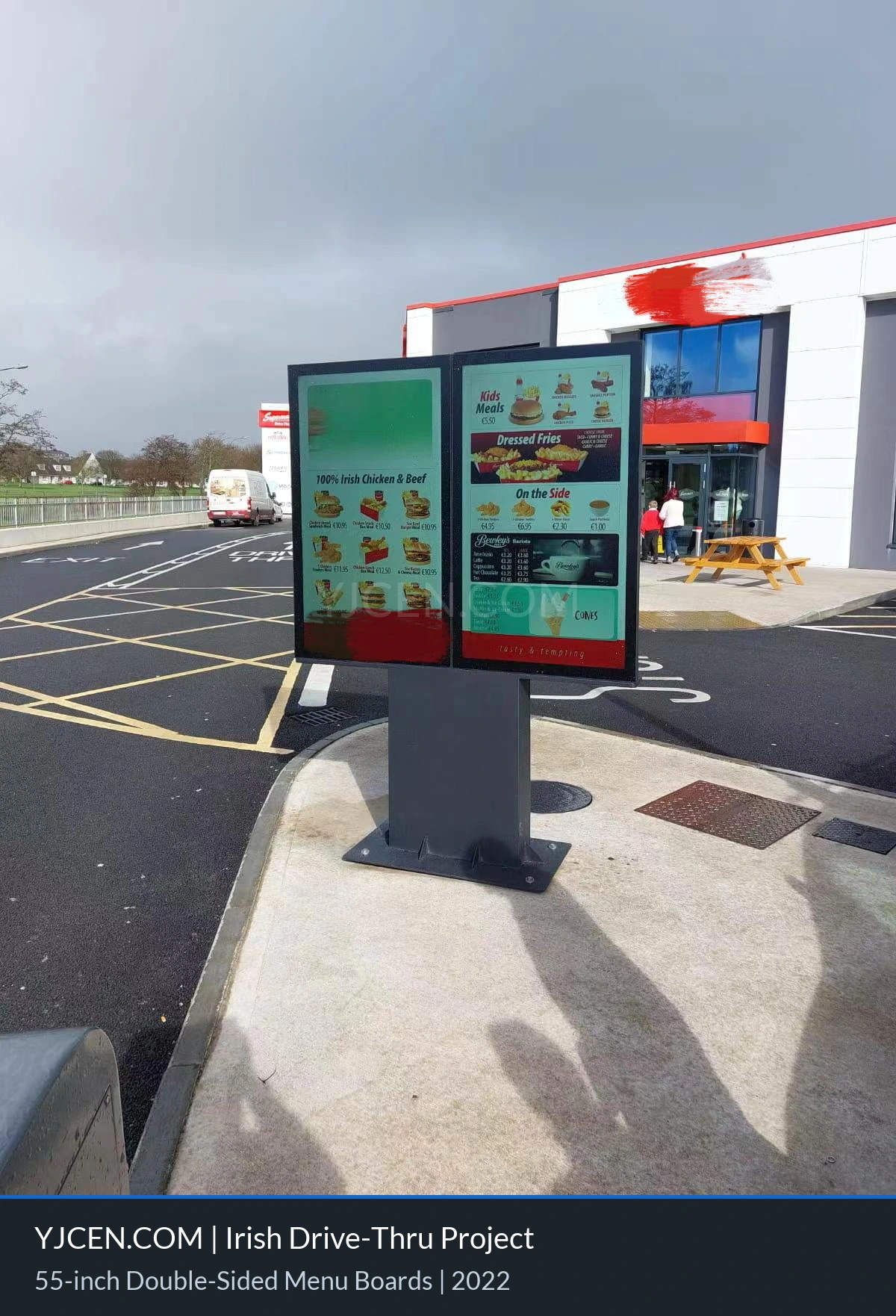
In 2022, YJCEN delivered three sets of 55-inch double-sided outdoor digital menu boards for a fast-food drive-thru in Ireland. The displays were installed along the ordering lane and configured for continuous 24/7 operation.
Each system uses 3,000-nit high-brightness displays and an IP67-rated enclosure. An intelligent air-cooling system manages heat inside the unit. The systems use AC mains power.
The project record states that the three systems have continued to operate stably since delivery. The client independently integrated its intercom, content management system and payment terminals through the open hardware platform.
Project Specifications
- Project: Fast-food drive-thru digital menu boards
- Location: Ireland
- Delivery year: 2022
- Quantity: Three sets
- Display size: 55 inches
- Display format: Double-sided
- Brightness: 3,000 nits
- Protection rating: IP67
- Cooling method: Intelligent air-cooling system
- Power supply: AC mains power
- Operating mode: 24/7 continuous operation
- Client integrations: Intercom, CMS and payment terminals
- Recorded status: Stable operation since delivery
Why the Drive-Thru Needed Outdoor Menu Boards
A drive-thru menu board operates outside the restaurant. It can face rain, humidity, dust and changing daylight. Customers also view it from inside a vehicle and have limited time to read each menu screen.
These conditions are different from those of an indoor menu display. The enclosure, brightness, cooling, mounting and power supply must match the outdoor location and the restaurant’s operating schedule.
For this project, the client selected a double-sided system. The display position and content could therefore serve the planned viewing directions along the lane. The exact arrangement was based on the site’s ordering flow.
Three Double-Sided 55-Inch Systems
The project included three sets of double-sided menu boards. Each system uses 55-inch displays. This format provides two display faces within each installed unit.
A double-sided design can be useful when menu information must face different approach directions. It can also support a lane layout in which customers pass the display at more than one point.
The project description does not claim that the same layout suits every drive-thru. Screen quantity and position should be planned from the lane dimensions, vehicle path and required viewing distance.
3,000-Nit Brightness for Outdoor Viewing
The displays supplied for this project have a brightness specification of 3,000 nits. This was selected for an outdoor menu application with changing daylight conditions.
Brightness alone does not determine readability. Screen direction, reflections, viewing distance and content design also affect what customers can see. The proposed location should be reviewed at different times of day before installation.
Menu content should use clear categories, legible text and strong contrast. Prices and ordering instructions need enough space around them. Excessive animation or dense text can make a menu harder to scan.
IP67 Protection in the Drive-Thru Lane
The installed systems use IP67-rated enclosures. The rating was selected because the equipment operates outdoors, where dust and water exposure must be considered.
An IP rating applies to the enclosure under defined conditions. It does not replace correct installation. Mounting points, cable entries, connections and service openings must maintain the intended protection.
The site team should also check drainage around the installation area. Standing water, vehicle splash and cleaning procedures may affect the final installation plan. Maintenance work must follow the product instructions.
Cooling for Continuous Operation
The menu boards support 24/7 continuous operation. They use an intelligent air-cooling system to manage internal heat while the displays are running.
Outdoor temperature, solar exposure and display brightness all affect thermal conditions. The cooling system therefore works as one part of the complete enclosure design.
Air paths and service areas must remain clear after installation. Routine inspection should include the enclosure and the cooling components identified in the maintenance instructions.
AC Mains Power and Cable Planning
The three systems use AC mains power. The site must provide suitable electrical access at each planned display position. Power work should follow the local requirements that apply to the installation.
Power, signal and network cables need a protected route. Cables should not interfere with vehicles, pedestrians or maintenance access. Entry points must also be compatible with the enclosure’s protection requirements.
The installation team should confirm cable lengths and connection positions before the equipment arrives. This reduces the need for changes after the mounting work has started.
Open Hardware Platform and Client Integrations
The systems use an open hardware platform. In this project, the client independently integrated its selected intercom equipment, CMS and payment terminals.
This distinction is important. The display hardware provides the outdoor visual interface, but third-party systems depend on the client’s selected configuration and integration work. They should not be treated as standard features of every menu board.
Intercom System
The client selected and deployed the intercom used for communication between customers and restaurant staff. Connection requirements should be confirmed before installation.
Content Management System
The CMS controls the menu content according to the client’s chosen workflow. Available scheduling, remote-update and monitoring functions depend on the selected CMS rather than the display enclosure alone.
Payment Terminals
The client also integrated its preferred payment terminals. Payment hardware, software and network requirements must be checked against the restaurant’s ordering process and local payment arrangements.
Content Planning for a Drive-Thru Menu
A customer may have only a short time to view the menu before ordering. The first screen should therefore present the main categories and the information needed to make a choice.
Menu designers should give priority to:
- Readable product names and prices
- A clear order for categories and meal options
- Strong contrast between text and background
- Images that do not cover essential information
- Short promotional messages
- Content that matches the current menu and availability
Sample content should be tested on the actual display. A desktop preview does not reproduce the viewing distance, daylight and vehicle position at the site.
Site Checks Before Installation
A site survey should document the lane and every proposed display position. Photos, measurements and service information help the project team check the installation before production and delivery.
- Lane layout: Record vehicle direction, stopping points and turning space.
- Viewing distance: Measure the expected distance from the driver to each screen.
- Daylight: Review direct sunlight and reflections at relevant operating times.
- Weather exposure: Check rain, humidity, dust, splash and drainage conditions.
- Power: Confirm AC supply locations and cable routes.
- Connections: Identify the interfaces needed for the intercom, CMS and payment equipment.
- Service access: Leave enough space for inspection and maintenance.
- Traffic safety: Keep equipment and service activity clear of the vehicle path.
Long-Term Operation and Maintenance
The project record reports stable operation since the systems were delivered in 2022. This is a description of this installation, not a guaranteed service life for every outdoor menu board.
Long-term operation depends on the equipment configuration, installation quality, environment and maintenance plan. The restaurant should inspect the mounting, enclosure, visible cables and cooling system at suitable intervals.
Content also needs routine review. Prices, products and operating instructions should remain current. Access to the CMS and other connected systems should follow the client’s own control procedures.
Information Needed for a Similar Project
Customers planning a drive-thru display project should provide the following information:
- Installation country and site address
- Lane plan, site photos and proposed display positions
- Required screen quantity and viewing directions
- Normal viewing distance
- Daily operating schedule or 24/7 requirement
- Expected daylight and weather conditions
- Power and network availability
- Intercom, CMS and payment-terminal requirements
- Installation and maintenance access
These details allow the hardware and installation plan to be reviewed together. Optional integrations can then be separated from the confirmed display specification.
Frequently Asked Questions
How many menu board systems were delivered?
YJCEN delivered three sets of 55-inch double-sided outdoor digital menu boards for this Irish drive-thru project.
What brightness was used?
The displays have a specified brightness of 3,000 nits. Final readability also depends on screen position, daylight, reflections, viewing distance and menu design.
What is the enclosure rating?
The systems use IP67-rated enclosures. Correct mounting, cable entries and maintenance are still required to support the intended protection.
Can the systems operate continuously?
Yes. The systems supplied for this project support 24/7 continuous operation and use an intelligent air-cooling system.
Were the CMS, intercom and payment terminals supplied as standard features?
No such general claim is made. For this project, the client independently selected and integrated its intercom, CMS and payment terminals through the open hardware platform.
How have the systems performed?
The project record states that the three systems have operated stably since their delivery in 2022. Results from one site do not guarantee identical performance in a different environment.
Explore Outdoor Digital Menu Board Solutions
Explore YJCEN commercial digital signage displays for restaurants, drive-thru lanes and outdoor applications. You can also review more digital signage client cases or contact YJCEN about an outdoor digital menu board project.