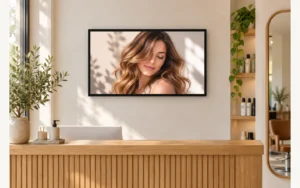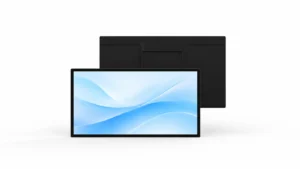
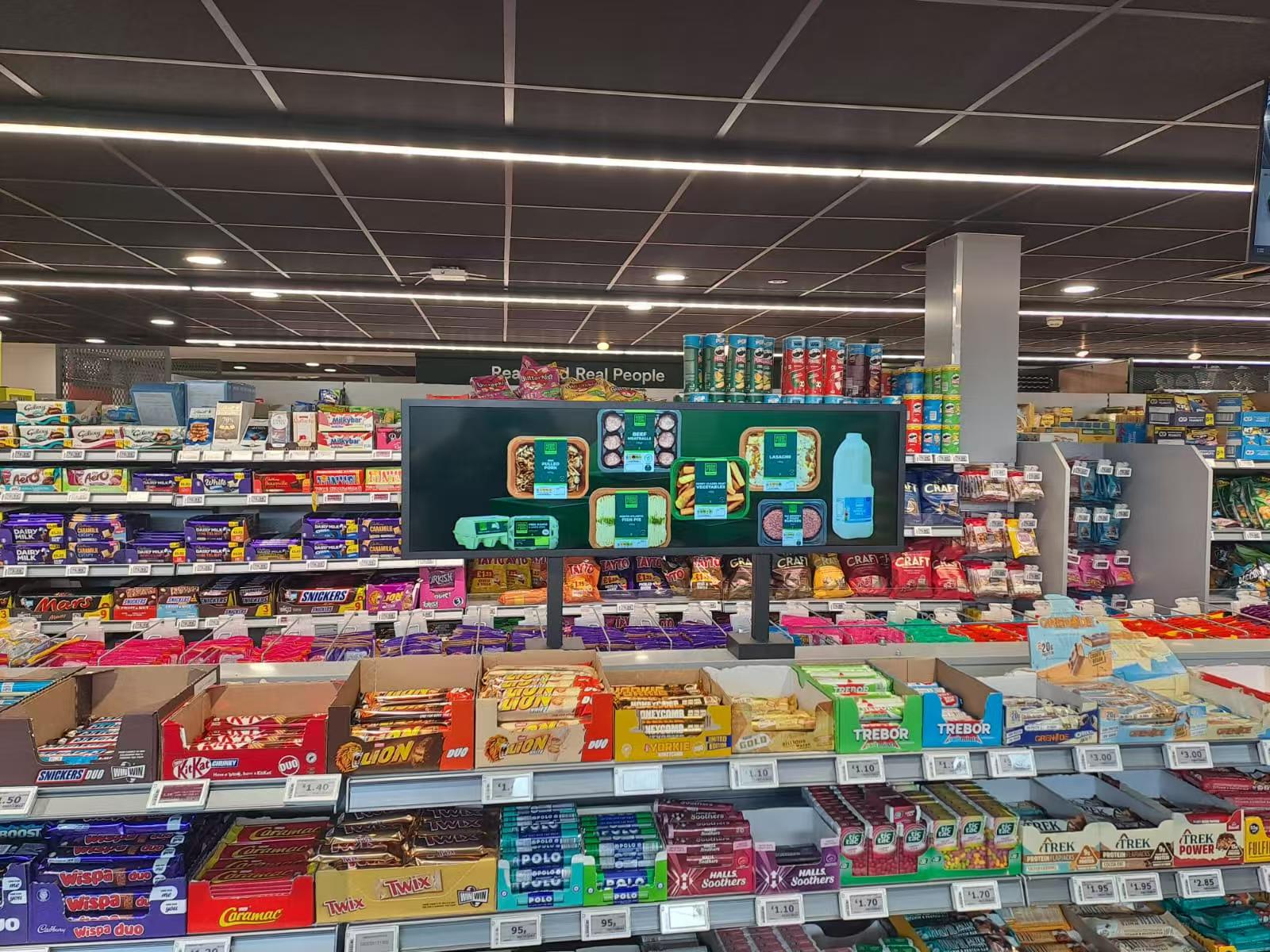
Stretched bar LCD displays are transforming the retail shelf edge from a static space for paper labels into a dynamic, engaging digital platform. Unlike single-color E-ink electronic shelf labels (ESLs) designed primarily for price updates, these are full-color, video-capable LCD screens. They are specifically engineered with an ultra-wide aspect ratio to fit perfectly onto retail shelving, endcaps, and other tight spaces.
This guide provides a comprehensive overview for retailers considering this technology. We will cover exactly how these displays are used to showcase dynamic pricing, promotions, rich product information, and video content. We'll also detail the critical factors to consider before purchasing, including sizing, content management, and installation requirements, empowering you to make an informed decision for your store.
What is a stretched bar LCD display used for?
A stretched bar LCD uses a wide, shallow display format for shelf-edge content such as prices, promotions, product information and moving graphics.
- Match the active dimensions and mounting method to the shelf or fixture.
- Prepare artwork for the panel's native resolution and unusual aspect ratio.
- Check readability under the store's lighting.
- Confirm power, content updates and any pricing-system connection before rollout.
What is a Stretched Bar LCD Display (and How is it Different from ESL)?
A stretched bar LCD display, also known as a bar type LCD or shelf edge display, is a commercial-grade liquid crystal display with a non-standard, wide aspect ratio. Think of a standard 16:9 TV screen that has been "stretched" horizontally, resulting in aspect ratios like 16:3 or 32:9. This unique form factor makes them ideal for deployment along the narrow horizontal space of a retail shelf.
It's crucial to distinguish them from Electronic Shelf Labels (ESLs):
- Technology: Bar displays use full-color LCD or LED technology, capable of displaying millions of colors, animations, and full-motion video. ESLs use E-ink (electronic paper), which is typically limited to two or three colors (black, white, red/yellow) and is best for static images like prices and barcodes.
- Primary Function: Bar displays are for customer engagement and marketing. They attract attention with video and dynamic graphics. ESLs are for operational efficiency, enabling rapid, store-wide price changes.
- Power Consumption: Bar displays require constant power to run the LCD panel and backlight, consuming more energy. ESLs are extremely low-power, with batteries that can last for years, as they only consume power when the display content is changing.
In short, if you want to simply automate price updates, ESL is your tool. If you want to attract, inform, and influence shoppers directly at the point of decision, the stretched bar LCD display is the superior solution.
How to Use Bar Displays to Drive Sales on Retail Shelves
The true power of stretched bar displays lies in their versatility. Here’s how you can leverage them in a typical retail environment.
Dynamic Pricing and High-Impact Promotions
This is the most direct application. Instead of a static sale tag, you can create eye-catching digital announcements.
- How it Works: The display can show the original price crossed out next to the sale price, a countdown timer for a flash sale ("Offer ends in 2 hours!"), or a "Buy One, Get One Free" graphic. The motion and bright colors are far more effective at grabbing a shopper's attention than paper.
- Installation & Size: Typically installed directly on the front rail of the shelf. Sizes like 23.1-inch or 28-inch are common, often matching the width of a standard 2-foot or 3-foot shelf section.
- Content & Wiring: Content is updated remotely via a Content Management System (CMS). For power and data, you can use a daisy-chain DC power system with a single media player running a section of shelves via Wi-Fi, or simplify cabling with Power over Ethernet (PoE) if your network infrastructure supports it.
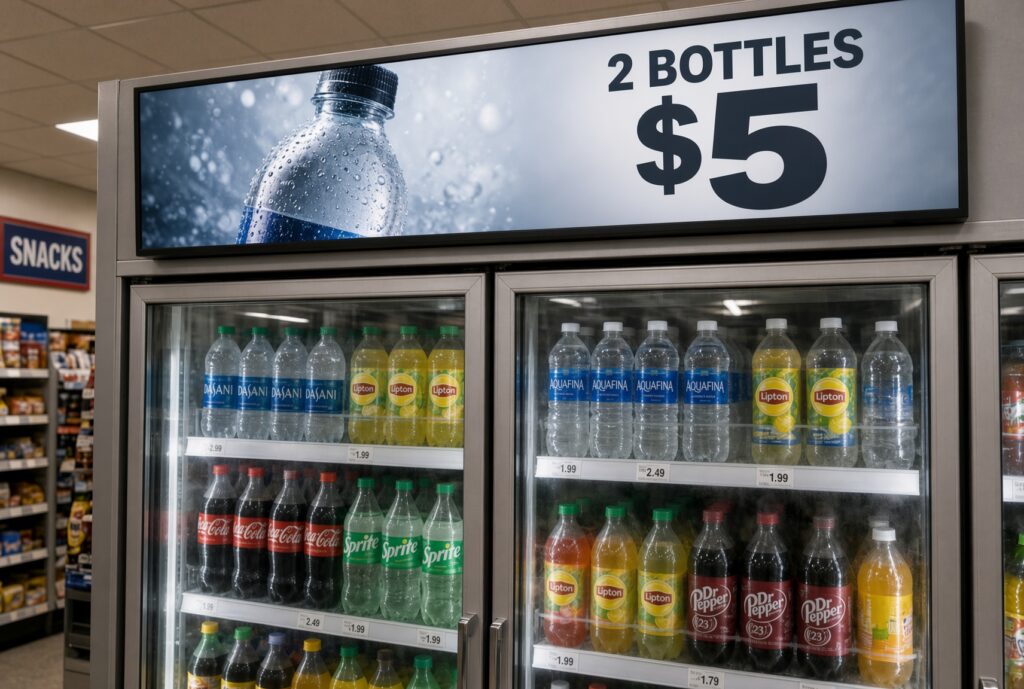
Shelf-edge stretch bar LCD screen mounted on retail beverage cooler displaying dynamic product advertising with refreshing water bottle imagery and promotional pricing. Ideal digital signage solution for convenience stores, supermarkets, and retail refrigeration units to boost impulse purchases and highlight special offers.
Rich Product Information and Brand Storytelling
Go beyond price and tell a story. This is especially effective for premium, organic, or complex products.
- How it Works: Display short videos showing a product's origin (e.g., a coffee farm), a quick recipe using a specific sauce, or key nutritional benefits (e.g., "Gluten-Free," "Rich in Omega-3"). This educates the consumer and builds brand trust directly at the point of sale.
- Installation & Size: Can be mounted on the shelf edge or integrated into a larger endcap display. The size depends on the viewing distance; a 37-inch bar display on an endcap can tell a story from 10-15 feet away.
- Content & Wiring: Content includes short video clips (MP4), high-resolution images (JPEG, PNG), and animated text. A stable network connection (wired LAN is preferred for video) and a capable media player are essential. Power is typically supplied via a standard DC adapter hidden in the shelving.
Cross-Selling and Up-Selling Suggestions
Increase the average basket size by suggesting complementary products.
- How it Works: On the shelf in the wine section, a display can suggest, "Pairs perfectly with our cheddar cheese in Aisle 5." In the pasta aisle, a display for sauce could show a video of it being used with a specific brand of artisan pasta located nearby.
- Installation & Size: Most effective when placed near the target product. A 24-inch or 28.6-inch display is large enough for text and accompanying product images without being overwhelming.
- Content & Wiring: The CMS is key here, allowing you to easily schedule and update pairing suggestions based on inventory or seasonal promotions. Standard Wi-Fi and DC power are usually sufficient for this application.
Key Technical Factors to Consider Before Buying
Choosing the right shelf edge display involves more than just picking a size. As a sales engineer, I advise clients to focus on these critical specifications.
- Brightness (Nits): For indoor retail environments, a brightness of 350 to 700 nits is standard. Anything lower may look washed out under bright store lighting. Don't overpay for ultra-high brightness (1000+ nits) unless the display will be in direct sunlight.
- Resolution: Higher resolution means sharper text and clearer images. For a 23.1-inch display, a resolution of 1920x158 is common. Ensure the resolution is sufficient for text to be legible from a typical shopping distance of 3-5 feet.
- Content Management System (CMS): This is your command center. A good cloud-based CMS allows you to update content on thousands of screens across hundreds of stores from a single web browser. Look for features like scheduling, playlist creation, and remote device monitoring. Many displays come with built-in Android media players, offering flexibility in CMS choice.
Connectivity and Wiring:
Power: The two main options are a standard DC power adapter or Power over Ethernet (PoE). PoE is highly recommended as it sends both power and data over a single Ethernet cable, dramatically simplifying installation and reducing cable clutter.
Data: Choose between Wi-Fi, LAN, or 4G. LAN (wired Ethernet) provides the most stable and reliable connection, crucial for synchronized video playback. Wi-Fi is more flexible but can be susceptible to interference in a busy store.
Mounting and Installation: How will the display attach to your shelves? Ask vendors about available mounting options, such as custom-fit brackets for specific shelving systems (e.g., Lozier, Madix), magnetic mounts, or standard VESA patterns for custom solutions.
Recommendations for Common Retail Scenarios
Let's apply this knowledge to real-world store sections.
For a Supermarket Cereal Aisle:
- Goal: Differentiate brands and run promotions.
- Recommendation: Use continuous runs of 23.1-inch or 28-inch displays. Utilize a CMS to schedule brand-specific content to play only in front of that brand's products. Use bright, animated graphics for sales. PoE is ideal here for long, clean runs.
- For a High-End Cosmetics Counter:
- Goal: Convey luxury and demonstrate product use.
- Recommendation: Integrate 19-inch or 24-inch bar displays with high resolution and excellent color accuracy into the counter millwork. The content should be sleek, high-production-value video. Synchronization via a wired LAN connection is a must for a premium feel. For a Promotional Endcap Display:
- Goal: Capture maximum attention for a featured product.
- Recommendation: A large 37-inch or even a 49-inch bar display mounted at eye-level. The content should be a simple, high-impact video loop with a clear call to action. This unit needs a dedicated power source and a reliable network connection.
Conclusion: The Future of the Shelf is Digital
Stretched bar LCD displays are a powerful tool for any retailer looking to modernize their stores, engage customers, and lift sales. By moving beyond static pricing and embracing dynamic, full-color content, you can transform the most valuable real estate in your store—the shelf edge—into an interactive marketing channel.
Before you invest, carefully evaluate your specific needs regarding application, content strategy, and the technical infrastructure of your stores. When implemented correctly, these displays offer a significant return on investment by directly influencing purchase decisions where it matters most.
Ready to explore how stretched displays can revolutionize your retail space?
-> Discover our full range of [Stretched Display]solutions.