
The primary goals for deploying digital signage in shopping malls are to enhance the shopper experience, boost revenue for the mall and its tenants, and streamline operations. By installing the right digital screens in key locations, you can effectively guide foot traffic, promote brands, broadcast instant information, and transform a traditional shopping space into a vibrant, interactive environment.
This guide details the seven most practical applications for digital signage within a shopping mall, covering everything from tenant advertising and floor navigation to interactive services. We will analyze the ideal placement, the core problem solved, and the most suitable screen format for each application, helping you formulate a precise and effective digital signage strategy for your commercial space.
Where can shopping malls use digital signage?
Common mall applications include tenant advertising, wayfinding, event notices, food-court menus, storefront campaigns, public information and interactive enquiries.
- Put directions at route decisions and menus where customers choose their orders.
- Match the screen format to the location, viewing conditions and available mounting space.
- Define the software and data needed for maps, transactions or other interactive services.
- Confirm power, service access and content responsibility before requesting a hardware quotation.
1. Tenant Advertising & Brand Promotion
This is the most direct revenue-generating application of digital signage in a shopping mall. By dynamically displaying tenant ads in high-traffic areas, the mall not only earns significant advertising revenue but also helps tenants increase brand exposure and sales.
Where to Place
- Main and secondary mall entrances
- Atriums, plazas, and other open spaces
- Escalator and elevator waiting areas
- Pillars or walls along major shopper pathways
Problems It Solves
- Replaces Static Lightboxes: Dynamic videos and rotating images are far more eye-catching than static posters. Content updates are also more flexible and cost-effective.
- Increases Ad Revenue: The mall can lease screen time to different tenants in slots, maximizing the value of each advertising placement.
- Drives Instant Sales: Tenants can promote limited-time offers, new arrivals, and flash sales to guide shoppers directly to their stores.
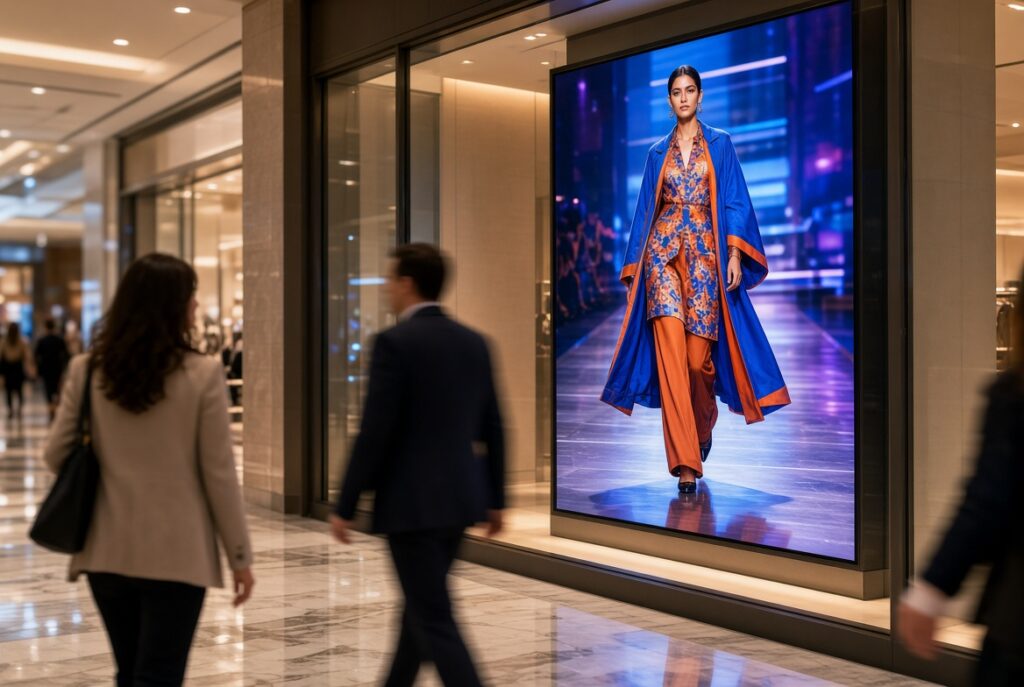
High-resolution digital signage display installed in upscale shopping mall storefront showcasing fashion runway content. Large-format LCD screen features vibrant fashion advertising with model in colorful designer outfit. Perfect example of retail digital advertising, window display technology, and in-store marketing solutions for luxury fashion brands, shopping centers, and high-traffic retail environments.
Suitable Screen Formats
- LCD Video Walls: Installed in atriums or central courts to play stunning brand commercials and create a premium atmosphere.
- Wall-Mounted Digital Posters: Installed in pairs or as single units on corridor walls or pillars, perfect for playing HD images and short videos.
- Hanging Double-Sided Displays: Installed above corridors to ensure that foot traffic from both directions can see the content.
2. Floor Navigation & Digital Wayfinding
Large shopping malls are complex, making a clear guidance system essential. Digital wayfinding for malls helps shoppers quickly find target stores, restrooms, parking, or service desks, significantly reducing the frustration of getting lost.
Where to Place
- Mall directories at main entrances
- Elevator lobbies and escalator landings
- Major intersections on each floor
High-resolution digital signage display installed in upscale shopping mall storefront showcasing fashion runway content. Large-format LCD screen features vibrant fashion advertising with model in colorful designer outfit. Perfect example of retail digital advertising, window display technology, and in-store marketing solutions for luxury fashion brands, shopping centers, and high-traffic retail environments.
Problems It Solves
- Reduces Shopper Confusion: With a suitable wayfinding application and venue data, shoppers can search for stores and view route information. Any 3D maps or animated directions must be included in the agreed software scope.
- Improves Operational Efficiency: Reduces the frequency of shoppers asking staff or at information desks for directions, freeing up personnel for other tasks.
- Optional Search Analytics: If the selected application includes analytics, the mall can review kiosk searches and requested destinations. Search activity does not by itself measure foot traffic.
Suitable Screen Formats
- Interactive Freestanding Kiosks: This is the most common format. Typically a 43-inch to 65-inch vertical touchscreen with a user-friendly and responsive interface.
- Wall-Mounted Touch Kiosks: Ideal for areas with limited floor space, offering the same functionality as freestanding models.
3. Event & Promotion Announcements
Shopping malls regularly host seasonal events, holiday promotions, and special sales. Digital signage is the perfect tool for broadcasting this time-sensitive information, effectively drawing crowds and creating a lively shopping atmosphere.
Where to Place
- Around the event space (e.g., the central atrium)
- At main mall entrances
- Near the customer service center
Problems It Solves
- Instant Information Delivery: Event schedules, promotion rules, and participating brands can be updated in real-time, ensuring shoppers always have the latest information.
- Creates an Event Atmosphere: Playing exciting event trailers or live video feeds attracts more shoppers and builds buzz.
- Increases Visibility: Compared to roll-up banners or paper posters, dynamic digital screens stand out much more effectively in a busy environment.
Suitable Screen Formats
- Freestanding Digital Posters: Choose a stable indoor position with suitable power and service access. If the display needs to move frequently, specify a portable format and confirm its power requirements.
- Modular Video Walls: Used as a backdrop for the main stage or at the entrance to create a strong visual impact.
4. Digital Menu Boards in Food Courts
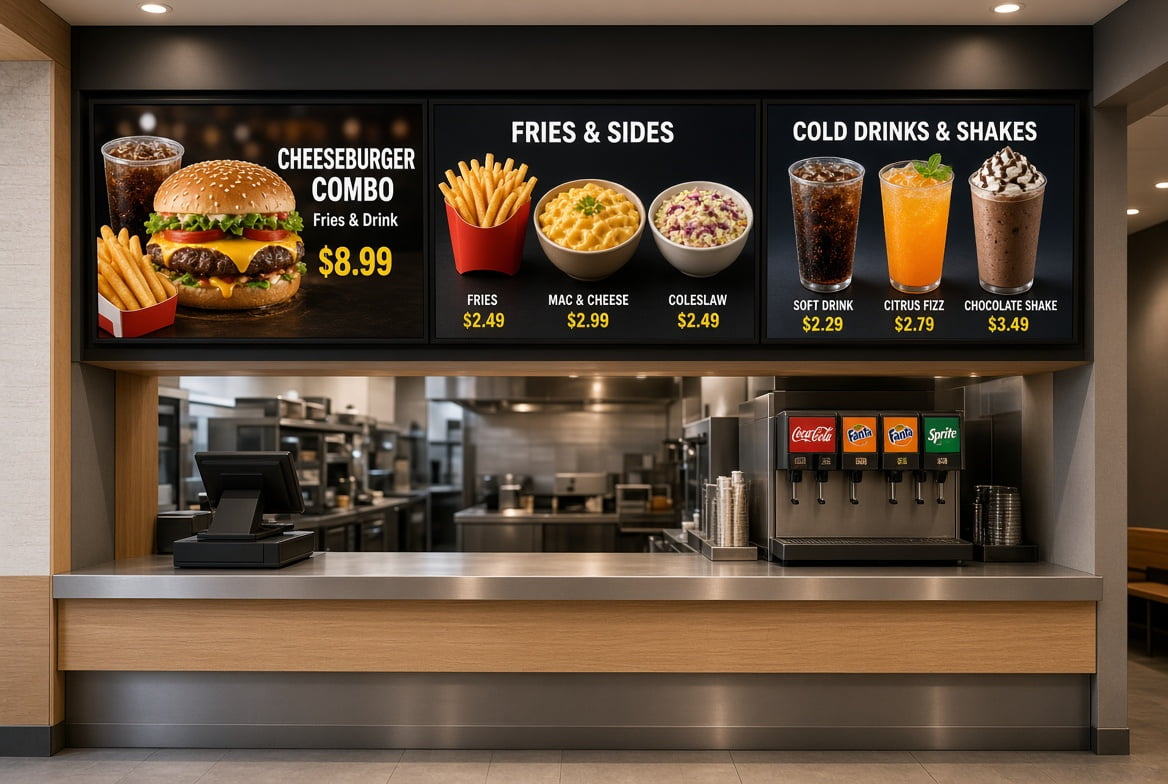
In food courts, digital menu boards have become a standard fixture. They not only make menus more visually appealing but also significantly simplify a restaurant’s operational workflow.
Where to Place
- Above the ordering counters of each fast-food restaurant
- At the entrance to the food court to display an index of all available restaurants
Problems It Solves
- Flexible Menu Updates: Restaurants can change items, prices, or feature combo meals at any time without reprinting menus. This is perfect for “daily specials.”
- Promotes Sales: Displaying high-definition, mouth-watering food videos can effectively stimulate appetite and guide customers toward high-margin items.
- Improves Ordering Efficiency: A clear, dynamic menu layout helps customers make decisions faster, reducing queue times.
Suitable Screen Formats
- Landscape Wall-Mounted Displays: A series of 3-5 screens are often mounted horizontally above the counter to form a complete digital menu wall.
- Self-Service Ordering Kiosks: Interactive terminals that combine menu display, ordering, and payment to further increase efficiency.
5. Interactive Storefront Windows
A store’s window is the first line of engagement to attract shoppers. Replacing static mannequins and posters with high-brightness or transparent screens can bring brand stories and product displays to life.
Where to Place
- Storefront windows facing the internal mall corridor
- Street-facing windows for stores with an exterior presence
Problems It Solves
- Attracts Foot Traffic: Dynamic and novel video content can stop shoppers in their tracks, grabbing their attention among a sea of stores and encouraging them to step inside.
- 24/7 Marketing: Even after the store is closed, the window screen can continue to play brand advertisements, extending marketing hours.
- Enhances Brand Image: A creative digital window display effectively communicates a brand’s modern, tech-savvy, and premium positioning.
Suitable Screen Formats
- High-Brightness Window-Facing Displays: Select brightness around the glass, window orientation, reflections, viewing distance and operating hours. Review street-facing locations in daylight; a single brightness threshold does not establish suitability for every installation.
- Transparent LED/OLED Displays: These screens can overlay digital information onto physical products, creating captivating augmented reality effects with a major “wow” factor.
6. Public Information & Emergency Alerts
A network of digital signs is a critical communication channel between mall management and shoppers. It can be used to broadcast service information and, more importantly, act as a life-saving tool in emergencies.
Where to Place
- Across all digital screens throughout the mall, including advertising screens, wayfinding kiosks, etc.
Problems It Solves
- Broadcasts Daily Service Information: Such as opening hours, loyalty program benefits, Wi-Fi access info, and restroom locations.
- Fulfills Social Responsibility: Can be used to play public service announcements, weather alerts, or lost-and-found notices.
- Emergency Evacuation Guidance: In case of fire or other emergencies, a central control system can override all screens to display unified evacuation routes, exit signs, and alert messages, guiding people to safety in an orderly manner.
Suitable Screen Formats
- The Entire Digital Signage Network: The key to this application is not a specific screen, but a robust Content Management System (CMS) that has an emergency alert override feature with top playback priority.
7. Interactive Inquiry & Entertainment
Beyond shopping, providing fun, interactive experiences can significantly increase shopper dwell time and enhance their overall affinity for the mall.
Where to Place
- Seating and lounge areas
- Near children’s play areas
- At the customer service center
Problems It Solves
- Increases Customer Engagement: Offers practical services like loyalty point inquiries, parking validation/payment, or printing store coupons.
- Provides Entertainment: Features like interactive games or social media photo booths are especially popular with families.
- Gathers Customer Feedback: Can be used to conduct simple surveys to collect opinions on mall services and amenities.
Suitable Screen Formats
- Multi-Touch Interactive Kiosks: Requires durable, responsive touchscreens to handle high-frequency public use.
- Large Touch-Enabled Video Walls: Used for multi-user games or immersive experiences that can create memorable public art installations.
Conclusion: Choosing the Right Screen for the Right Place
Choose Hardware for the Mall Location
| Location and task | Display format | Power, mounting and service access | Software responsibility | Product option |
|---|---|---|---|---|
| Corridor walls or pillars: promotions and public information | Indoor wall-mounted LCD display | Confirm wall support, orientation, power, cable routing and maintenance clearance. | Select the player or CMS and define who updates the content. | indoor digital signage |
| Entrances or event information points: non-interactive advertising | Indoor floor-standing display | Check the base footprint, stable placement, power and service access; keep circulation routes clear. | Confirm the playback and content-update workflow for the chosen configuration. | floor-standing digital signage |
| Directories and visitor search points: interactive information | Touchscreen information kiosk | Check reach to controls, enclosure space, power and the application’s connectivity requirements. | The project must specify the wayfinding application, venue maps, destination data and who maintains them. These are separate from the kiosk hardware. | interactive kiosk |
Use the location and visitor task to select the format. Confirm the screen size, quantity, power and software scope before requesting a hardware quotation.