What does IK10 mean for a display or kiosk?
IK10 corresponds to 20 joules of external mechanical impact under defined test conditions. It describes tested impact protection, not immunity to every kind of damage.
- Ask which model, revision, surfaces and mounting arrangement the evidence covers.
- Check the stated test standard and report scope.
- Evaluate water and dust protection separately through the relevant IP rating.
- Do not infer an IK rating from glass thickness alone.
IK10 does not mean a screen is unbreakable. It also does not describe water protection, sunlight readability or the strength of the wall behind a bracket. Treat it as one part of the installation brief, supported by evidence for the actual product.
What does the IK10 rating mean?
The IEC 62262 standard classifies protection provided by electrical equipment enclosures against external mechanical impacts. An IK code identifies an impact protection level; it is not a general quality score for the complete installation.
Joules describe energy. The number helps compare the impact levels covered by the rating, but it does not reproduce every object, contact shape or repeated strike that equipment might encounter in service. A test result needs to be read with its scope and conditions.
For a public display, ask whether the evidence covers the front face, the enclosure or a particular component. A statement about a piece of glass should not automatically be treated as a result for the assembled screen.
IK08, IK09 and IK10: compare the stated energy
| Rating | Impact energy | What the number does not tell you |
|---|---|---|
| IK08 | 5 J | The glass thickness, mounting strength or water protection. |
| IK09 | 10 J | Whether every product configuration has the same test evidence. |
| IK10 | 20 J | Resistance to every possible act of vandalism or accidental collision. |
The energy values are also listed in Axis Communications’ official guide to data sheets. They explain the rating scale; they are not test results for any YJCEN display.
A higher stated energy can be relevant at an exposed location, but the number alone does not settle the specification. Review the risks at the site and ask for evidence that matches the proposed screen, enclosure and installation arrangement.
Keep impact protection separate from IP protection
IK and IP address different hazards. IK concerns external mechanical impact. An IP code concerns enclosure protection against access to hazardous parts and the ingress of solid objects or water. An IK10 statement does not establish a rain or dust rating.
An outdoor display may need both forms of protection, along with suitable brightness and temperature performance. Ask for each requirement separately. Otherwise, a broad description such as “rugged outdoor screen” can leave important details unanswered.
Our guide to IP protection for outdoor digital signage covers the ingress side. When reviewing an outdoor LCD display configuration, confirm its impact rating independently rather than deriving it from the product’s IP designation.
Check what was actually tested
Request the product identification and the relevant test report or supplier evidence. The name on a quotation may describe a family of screens, while the test document refers to one size or enclosure revision. Ask the supplier to explain how the document relates to the supplied unit.
- Model and revision: identify the enclosure, front assembly and configuration covered.
- Test basis: confirm the standard and edition stated in the report.
- Scope: identify the surfaces or parts included in the assessment.
- Mounting: review the support arrangement used for the test and the intended installation.
- Outcome: read the recorded result and the criteria used to assess the sample.
- Changes: ask whether different glass, touch layers, doors or fittings affect the claim.
The aim is to connect a short specification label to a specific assembly. A report for another product can explain a test method, but it does not establish the rating of the screen being offered to you.
Why glass thickness is not a substitute for evidence
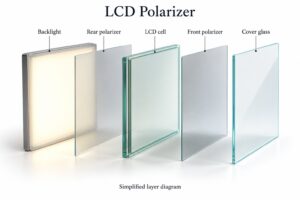
The front of a display includes more than a glass sheet. Its edges, supports, seals, frame and the space behind it form an assembly. A thickness value describes one element of that assembly; it cannot, on its own, establish an IK rating.
Ask the supplier to confirm the front construction without assuming that thicker always means the right solution. Touch performance, reflections, service access and the overall enclosure design also matter to the way the display will be used.

Likewise, optical bonding and impact protection should be checked separately. Our optical bonding guide explains how filling an internal air gap can affect reflections and service arrangements. The presence of bonding is not proof of a particular impact rating.
Assess the location before choosing the protection level
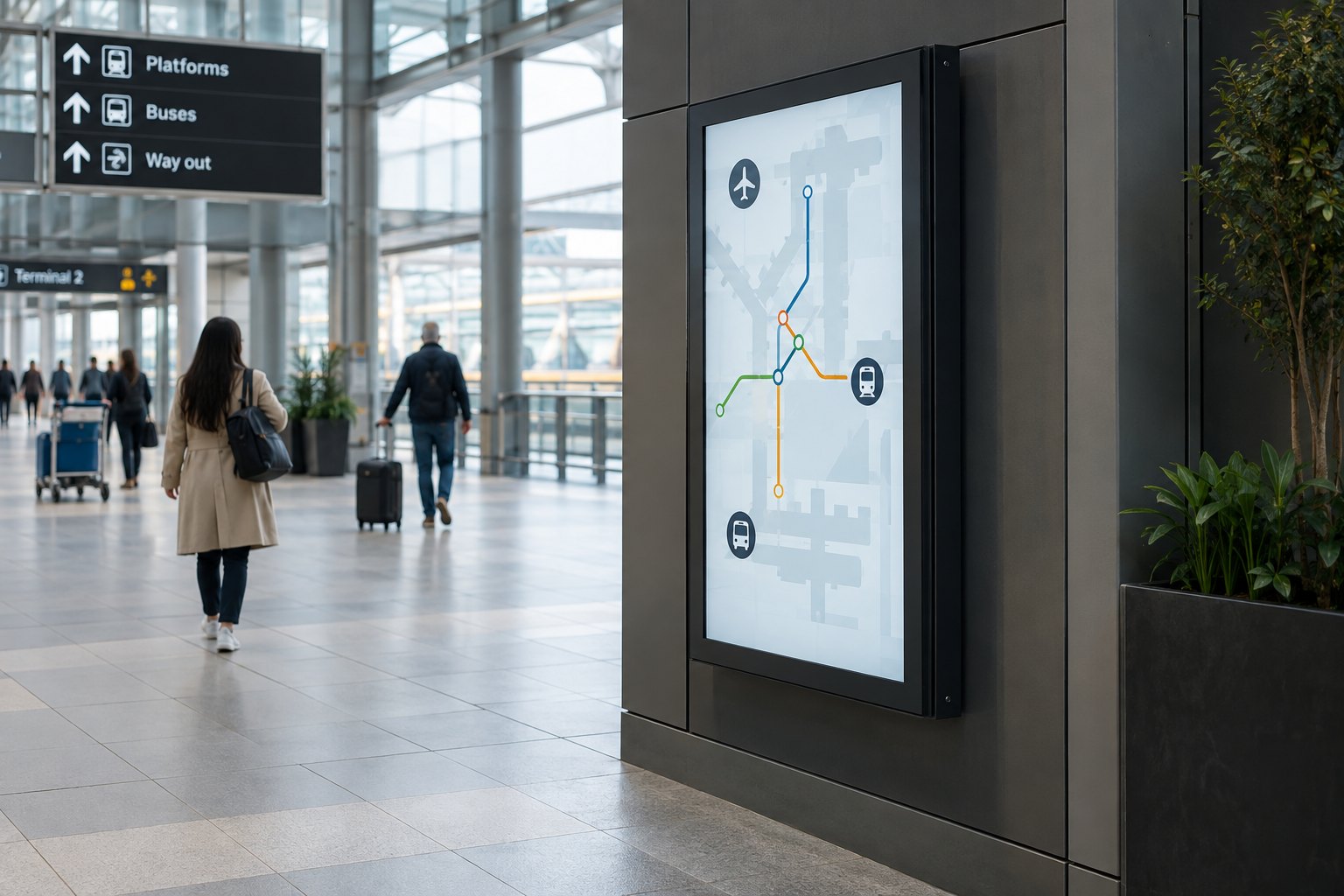
Walk the proposed installation area. Consider passing trolleys, cleaning equipment, moving furniture and unsupervised access. A display beside a loading route faces a different exposure from one set back behind a staffed reception desk.
Look at the height and reach of the screen as well as its enclosure. A protruding corner can be struck during routine movement even when the front face is outside the main walking line. Placement can sometimes reduce the exposure more effectively than changing a single specification.
Also check the supporting structure. A rated enclosure does not establish the suitability of a wall, anchor or freestanding base. The installer needs the actual mounting details and site conditions to assess that part of the project.
For an interactive kiosk, review normal user contact separately from accidental impact. Touch controls must remain comfortable and readable; a protective arrangement that obstructs the interface can make the kiosk difficult to use.
Plan inspection and repairs after installation
Keep photographs and product identification with the handover record. Give the site team a clear route for reporting damage to the glass, frame, doors or mounting. Visible damage should be assessed through the supplier’s service process rather than judged only by whether the picture still appears.
Ask which replacement parts preserve the agreed construction. If the front glass or enclosure is changed, confirm whether the original evidence still applies. Keep the revision of the replacement assembly with the maintenance record.
Agree how a damaged screen will be taken out of public use and repaired. An impact rating does not replace a maintenance plan, and a spare display or repair route may matter more to daily operation than an unexplained “vandal-proof” label.
Common questions about IK10 displays
Does IK10 mean vandal-proof?
No. It indicates a defined level of impact protection under test conditions. It is not a promise that deliberate damage, repeated attacks or every type of object will leave the equipment unharmed.
Can I check the rating by striking a sample myself?
An informal strike is not equivalent to a controlled test. Request the relevant evidence and agree any additional evaluation with the supplier or a suitable laboratory instead of treating an improvised demonstration as certification.
Is IK10 included on every outdoor display?
No. Outdoor use and impact protection are separate requirements. Send YJCEN the proposed location and protection requirements, and ask for the rating and supporting information available for the exact configuration before ordering.