1. The Market Pulse: Why Digital Menus Are No Longer Optional
The shift from static to digital menu boards is accelerating, driven by clear operational and financial benefits. This isn’t just a trend; it’s a fundamental change in how successful restaurants operate.
Market Growth:According to Grand View Research, the global digital signage market, valued at over $24 billion, continues to see significant growth in the restaurant and hospitality sectors. The need for dynamic menu updates and visually appealing content is a primary driver.[¹]
Operational Efficiency:The 2023 Restaurant Technology Report by Toast highlights that restaurant operators are prioritizing customer-facing technology to combat labor shortages and streamline menu management. Digital menus are a core component of this strategy, allowing for instant updates to pricing, promotions, and item availability without manual labor or printing costs.[²]
The takeaway:Digital menu boards have evolved from a “nice-to-have” aesthetic feature into a critical piece of front-of-house infrastructure that directly impacts efficiency, customer experience, and profitability.
2. The Compliance Baseline: Navigating Menu Labeling and Data Security
Before diving into technology, it’s crucial to address the regulatory landscape. Non-compliance can lead to significant fines and damage to your brand’s reputation.
FDA Menu Labeling:In the United States, the FDA’s regulation (21 CFR 101.11) mandates that restaurant chains with 20 or more locations must display calorie information on their menus and menu boards. A robust digital menu system makes this complex task simple, allowing for easy updates and ensuring information is always accurate and visible.[³]
Brand Consistency and Control:In a multi-location setup, a centralized Content Management System (CMS) is vital. It allows brand managers to approve promotional content and pricing changes, ensuring a consistent brand message across all franchises.
Data Security:If your menu boards integrate with loyalty programs or mobile apps, they must adhere to data privacy regulations like GDPR and CCPA. Ensure your software partner prioritizes data security.
3. Hardware Fundamentals: The Three Pillars of a Great Display
Not all screens are created equal. Choosing commercial-grade hardware is the foundation of a reliable and effective digital menu board system.
| Key Metric | Recommended Specification | Why It Matters |
|---|---|---|
| Brightness | 500-700 nits | Essential for visibility in brightly lit restaurant interiors. Overcomes glare from windows and indoor lighting. |
| Operational Rating | 24/7 Certified | Guarantees the display is built to withstand the long operating hours of a commercial environment without failure. |
| Color Accuracy | ≥92% NTSC or ≥85% DCI-P3 | Ensures food photography looks vibrant and appetizing, and brand colors are reproduced perfectly. |
| Surface Finish | Anti-Glare (Haze > 25%) | Reduces reflections, making the menu easy to read from any angle. |
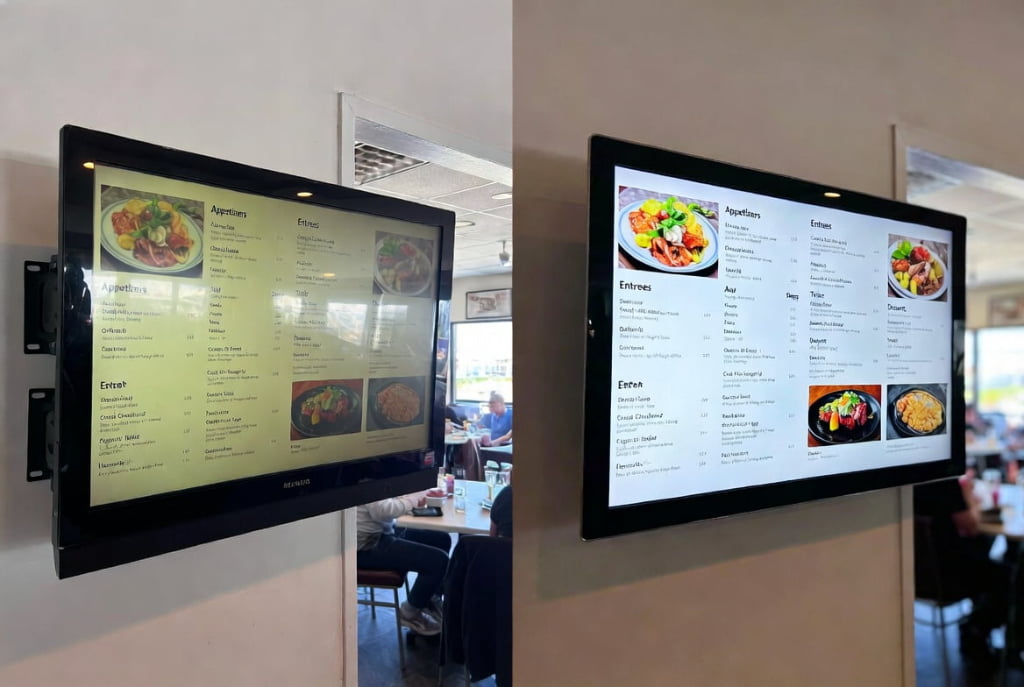
Displays engineered for 24/7 commercial use are non-negotiable. Our indoor menu board “Pro-Menu 700 Series“, for example, is specifically designed for these demanding environments, offering 700-nit brightness and anti-glare technology to ensure your menu is always the star of the show.
4. Software & Systems Integration: The Brains Behind the Screen
The true power of digital menus is unlocked when they are integrated with your existing restaurant technology stack.
POS Integration:The most critical integration is with your Point of Sale (POS) system (e.g., Oracle MICROS, Toast, Square). This allows for automatic, real-time updates to the menu boards when a price is changed or an item is marked “sold out” in the POS. This eliminates manual entry errors and customer frustration.
Dynamic Content Scheduling (Dayparting):A powerful CMS allows you to schedule menu changes automatically. Your breakfast menu can seamlessly switch to the lunch menu at 11:00 AM, and promotional offers can be scheduled to appear only during specific hours to drive sales during slow periods.
Real-World Success:McDonald’s highlighted in its 2023 investor presentation that its digital menu boards use a recommendation engine to dynamically suggest items based on time of day, weather, and current restaurant traffic, helping to increase the average check size.[⁴]
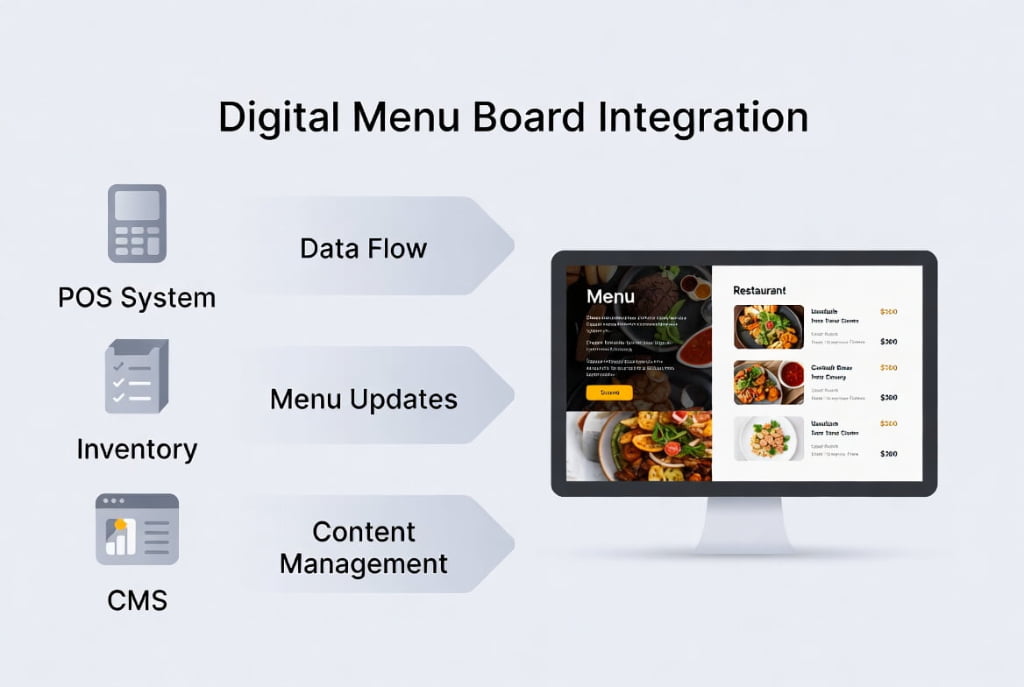
A robust software platform is key to unlocking this potential. The content management system we offer provides powerful scheduling capabilities for single-location restaurants and multi-unit dining chains alike.
5. Content Strategy: From a Static List to a Selling Machine
An effective content strategy transforms your menu board from a price list into a powerful marketing tool.
Visual Hierarchy:Use high-quality video or subtle animations of your signature items to draw the customer’s eye. Place high-margin items or combo deals in the most prominent positions.
Upselling and Cross-selling:Use a dedicated portion of the screen to promote add-ons like desserts, specialty drinks, or side upgrades. A simple prompt like “Make it a large for just $1 more!” can significantly boost sales.
Readability is Key: Ensure text is large and clear with high contrast against the background. This is not only good design but also essential for accessibility, aligning with principles from the Web Content Accessibility Guidelines (WCAG).[⁵]
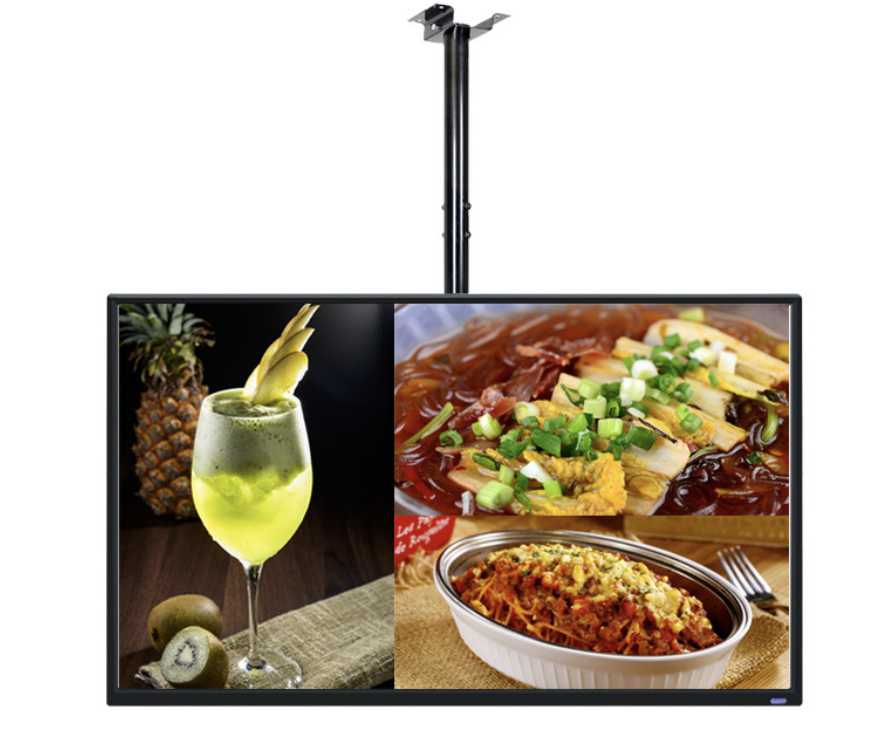
The best hardware allows this dynamic content to shine. With the high color accuracy and 4K resolution of displays like the Ultra-slim menu board, your food photography will look as delicious on screen as it does on the plate.
6. Implementation and ROI: A Practical Checklist
Ready to make the switch? Follow this roadmap for a smooth transition and maximum return on investment.
1. Assess Your Needs: Analyze your store layout, menu complexity, and promotional frequency.
2. Plan Your Content: Create a library of templates and high-resolution assets. Establish a workflow for content approval.
3. Choose the Right Partner: Select a provider who offers both reliable hardware and an intuitive, integrated software platform.
4. Run a Pilot Program: Test your new system in 1-3 locations. Measure the impact on sales, order accuracy, and customer wait times.
5. Scale with a Standard: Use the learnings from your pilot to create a standardized rollout plan for all locations.
6. Analyze and Optimize: Use the data from your CMS and POS to continuously refine your content strategy and promotional offers.
Conclusion: Your Menu Board as a Digital Asset
In 2024, an indoor digital menu board is more than just a screen; it’s a data-driven, revenue-generating digital asset. By combining high-reliability hardware with intelligent, integrated software, restaurants can improve operational efficiency, enhance the customer experience, and directly increase sales. It represents a strategic investment in building a more resilient and profitable business.
Ready to build a smarter, more profitable front-of-house experience? Explore our range of commercial-grade digital menu boards, including the versatile “Pro-Menu DM Series” and contact our team for a personalized consultation based on these industry best practices.
References
[1]: Grand View Research. Digital Signage Market Size, Share & Trends Analysis Report, 2023-2030.
[2]: Toast, Inc. 2023 Restaurant Technology Report.
[3]: U.S. Food & Drug Administration. Menu Labeling Requirements (21 CFR 101.11)*.
[4]: McDonald’s Corporation. Investor Day 2023 Presentation.
[5]: W3C. Web Content Accessibility Guidelines (WCAG) 2.1.